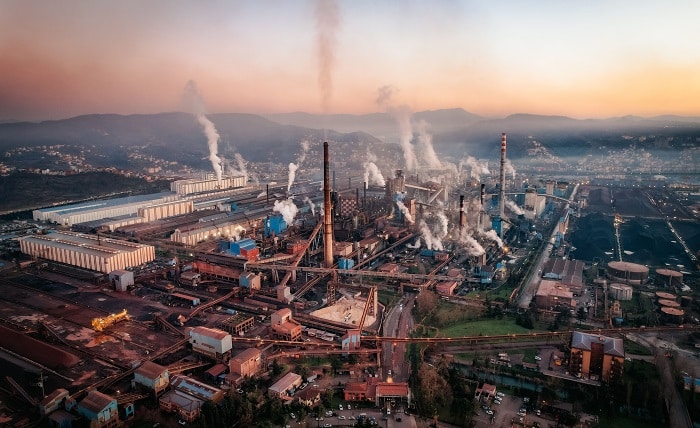
Poor air quality inside a factory or warehouse rarely makes headlines. It builds up slowly, in the background, until it shows up as sick days, equipment failures, or a failed inspection. Business owners often treat air quality as a maintenance issue. It’s actually a risk management issue, and it touches everything from staff retention to insurance premiums.
The Real Cost of Poor Air Quality
Industrial processes generate particulates, vapours, and gases that don’t just disappear once production stops for the day. Welding fumes, wood dust, chemical vapours, and diesel exhaust all settle into the air handling system and recirculate. Over time, this changes the chemistry of the workplace.
Workers exposed to these conditions face measurable health consequences. According to the Health and Safety Executive, around 12,000 lung disease deaths each year in Great Britain are linked to past workplace exposures. That figure covers conditions like COPD, occupational asthma, and asbestos-related disease, most of which trace back to airborne contaminants that businesses could have controlled.
This is why more facility managers now work with specialists such as Zehnder Clean Air Solutions early in a facility redesign, rather than after a health complaint or an audit failure forces the issue.
Where Airborne Contaminants Come From
Every industrial site has its own contamination profile. Metalworking shops deal with fine particulate from grinding and cutting. Print and packaging facilities deal with solvent vapours. Food production sites deal with flour dust and allergens. None of these are theoretical risks. They accumulate in ductwork, settle on machinery, and get inhaled continuously by staff working nearby.
Standard ventilation was never designed to handle this. Most older HVAC systems move air around a building. They don’t filter it to industrial hygiene standards. That distinction matters more than most facility managers realise until something goes wrong.
Compliance Isn’t Optional
UK businesses operate under COSHH regulations, which require employers to assess and control exposure to hazardous substances. This isn’t a box to tick once a year. It requires ongoing monitoring, documented control measures, and evidence that exposure limits are actually being met, not just estimated.
Falling short here carries real consequences:
- Enforcement notices from the HSE, which can halt production
- Fines that scale with the severity and duration of non-compliance
- Civil claims from employees who develop occupational illness
- Higher insurance premiums once a claim history exists
- Reputational damage that affects recruitment and client contracts
None of these are abstract risks. They show up in quarterly budgets and in how quickly a business can hire skilled staff in a competitive labour market.
Health Risks Businesses Can’t Ignore
Short-term exposure to poor air quality causes headaches, throat irritation, and fatigue. Workers notice this immediately, and it affects concentration and error rates on the floor. Long-term exposure is where the real damage happens.
Chronic exposure to dust and fumes contributes to permanent lung scarring, occupational asthma, and in some sectors, cancer. These conditions often take years to develop, which means the exposure causing them today may not show up as a claim or a diagnosis for a decade. That lag is exactly why proactive air management pays off. Waiting for symptoms means waiting too long.
Building an Effective Air Quality Strategy
A serious air quality strategy covers more than filtration. It needs to address the full cycle of how contaminants enter, move through, and exit a facility.
A practical approach includes:
- Source capture at the point of emission, before contaminants spread into the wider workspace
- Mechanical filtration matched to the specific particulate or vapour type
- Regular monitoring with data logged against COSHH exposure limits
- Scheduled maintenance of filters and extraction systems, not reactive repairs
- Staff training on recognising early signs of poor air quality
Each of these steps depends on the others. Filtration without source capture is inefficient. Monitoring without maintenance just produces data nobody acts on. A coordinated system, designed for the specific industrial process, performs far better than a generic ventilation upgrade.
The Bottom Line
Air quality isn’t a compliance line item to clear once a year. It’s an operational factor that affects staff health, production uptime, and legal exposure every single day. Businesses that treat it as infrastructure, not maintenance, avoid the larger costs that show up later: fines, claims, and lost productivity.
Getting the assessment right at the start saves money and protects people. That’s a better trade than dealing with the consequences after the fact.