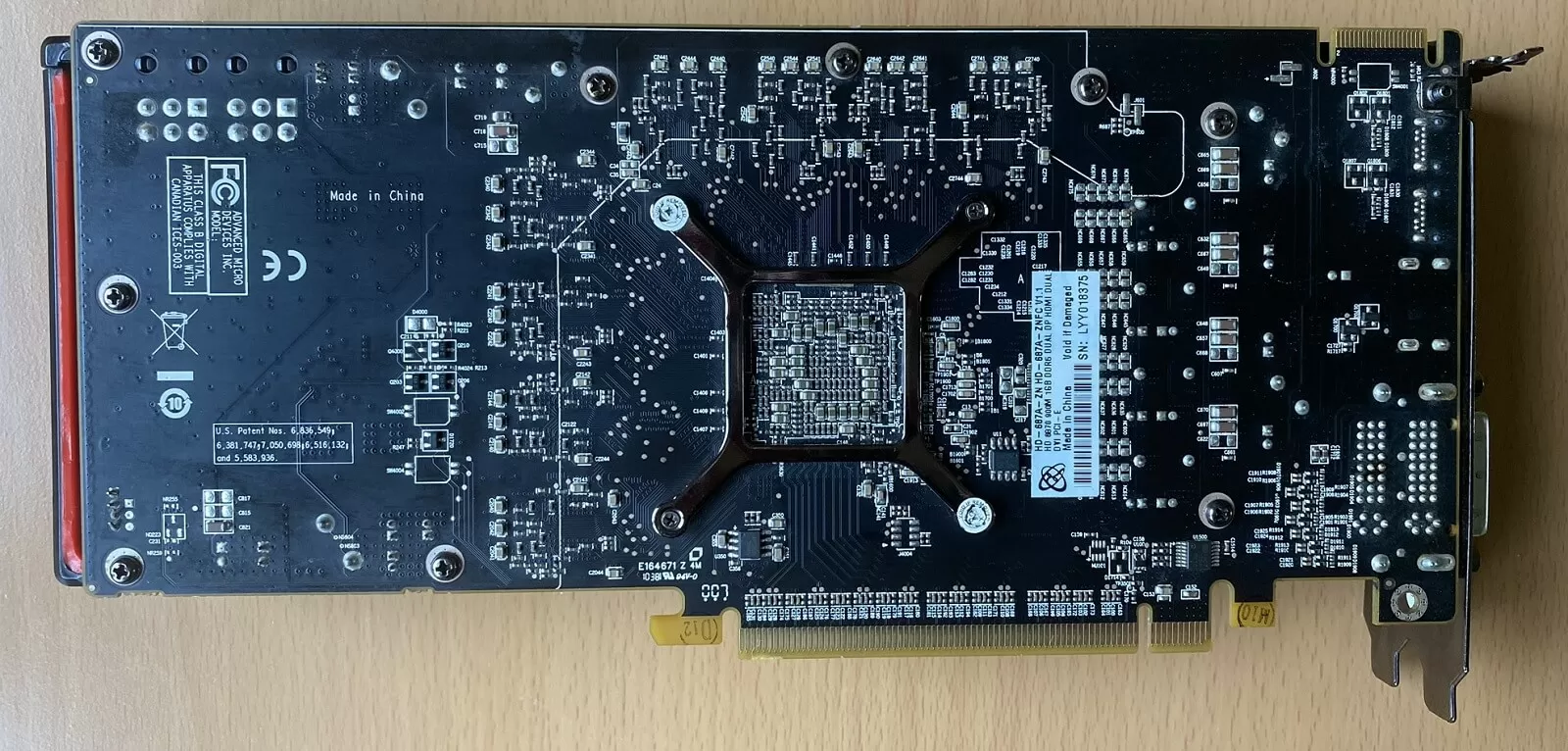
A graphics processing unit (GPU) chipset is the core component of any graphics card, and its performance is a critical factor in determining a graphics card’s ability to handle demanding games at their highest possible quality. A better GPU means better performance in games.
Understanding the GPU chipset fundamentals
The chipset (GPU): The GPU chipset is the silicon basis of your graphics card. On this chip there are thousands of cores spread across it. Unlike the CPU, in the graphics processor these cores are processed in parallel to a very high degree and therefore are very efficient in processing large amounts of data. Here as well the cores are the processing units, in large numbers as a parallel processor. The area of application of large amounts of data in the graphics processing is for example the processing of textures as well as the large number of mathematical calculations in games with many objects and light sources.
A GPU chipset sets the upper limit for a graphics card, so in the end it is just a piece of silicon and memory (and how that memory bandwidth is used and how that silicon is cooled).
Chipsets for graphics processing units are also known by the model numbers of graphics cards. Large differences can be seen in the number of cores, the clock frequency, and in architectural details. Most people are not aware of the fact that the GPU chipset also includes a memory controller (i.e., the interface between GPU and system memory), power consumption, and a thermal design power (TDP). This means that large differences can exist in the performance of graphics cards based on the limits of the used GPU chipset.
Architecture variations that matter
When looking at a graphics card, you have to remember that there is a lot more to the GPU than just the cores. Architecture is another thing that can change greatly from model to model, with most recent graphics cards optimized for huge amounts of Ray Tracing thanks to the addition of dedicated cores to handle such tasks. Most recent NVIDIA architectures have also been designed with AI workloads in mind and have the required hardware to deal with them, including Tensor cores for use in Deep Learning and other such tasks. Most recent architectures from AMD instead are optimized for rasterization, while also looking to improve memory efficiency. The architecture of a GPU greatly affects the way that it will perform in real world applications, with some better suited to specific tasks than others.
NVIDIA currently focuses their recent GPU architectures such as Ampere and Ada towards optimizing towards workloads that heavily utilize ray tracing and AI powered graphics. These architectures feature RT cores that are optimized for rendering ray traced graphics, as well as Tensor cores that are designed to perform AI calculations that power applications that require large amounts of AI processing power. Other architectures, such as AMD’s current lineup, focus more on raster work and increasing the amount of work that can be done for a given amount of power. This means that games that do not rely heavily on ray tracing or AI processing will likely get similar frame rates from NVIDIA desktop GPU chipset or AMD powered systems, but with less power consumption from the AMD architecture.
Manufacturing process impact
The manufacturing process of the GPU’s chipset also plays a significant role in the overall performance of the graphics card.
Newer GPUs are also made on much smaller processes than older cards, and the number of transistors on a die increases exponentially with process size decreases. So that 4nm GPU will contain many more transistors in the same area than a 12nm part, for example, and as a result will make up for in performance per watt what the older part lacks in.
The silicon for the high-end GPUs is mostly made in the advanced fabrication processes of TSMC (4nm and 5nm). Due to the increased competition in between NVIDIA and AMD both companies are now fighting for the wafer allocation in these processes.
Memory controllers and bandwidth management
For Graphics Cards the on-chip memory controller (MMC) is responsible for the transfer of data from the main memory to the Graphics Core. In modern GPUs typically a memory controller for GDDR6 as well as for GDDR6X is implemented. The memory interface widths start at 128Bit for low end GPU chipsets. High end models can have interfaces up to 384Bit or even more.
When thinking about memory on a graphics card, most people don’t realize that even the highest end graphics card can have hundreds or even thousands of cores. However, all of these cores are unable to process any data unless the memory on the graphics card is able to supply the necessary information in time. In other words, the processing cores on the graphics card are waiting for data to be supplied by the memory on the graphics card. This means that the memory specification of a graphics card is just as important as the number of cores on the graphics card.
Advanced GPUs can also feature the use of compression algorithms within the memory controllers, to boost the apparent bandwidth of the available memory. Others may even have a caching hierarchy within the memory controller, to attempt to get at the data that the GPU needs as quickly as possible.
Power efficiency and thermal considerations
Finally the performance per watt. High end GPUs are often designed with less efficient chipsets in order to gain as much performance as possible. However, for the gamers with a limited power supply, a midrange GPU with a more efficient chipset often is the best solution. This type of GPU offers the most performance for the least amount of power (in watts). As an example, the RX 560 with a power consumption of 130watt offers similar performance then the RX 580 with a consumption of 225watt. This is also known as ‘bang for your buck’ (in terms of performance per watt).
In a similar way, every GPU chipset will have a performance per watt curve that the card will follow. Therefore, even though a higher-end GPU will have less efficient silicon than a lower-end GPU, the performance will typically be higher as well. In terms of power, a mid-range GPU is designed to find a sweet-spot between the performance and the power required to achieve that performance. This means that at a certain level of power the GPU will achieve its highest level of performance. In addition to this the chipset will determine how much power the GPU will draw from the PSU and therefore what kind of VRM’s (voltage regulator modules) are required as well as the amount of cooling required to keep the card at a safe temperature to operate.
The silicon will protect itself by reducing clock speeds when temperatures exceed safe thresholds, or in extreme cases dropping to zero, in order to prevent damage. This is commonly referred to as thermal throttling.
As the silicon within a GPU can heat up significantly when being utilized and can potentially cause damage to your card. To stop this from happening the GPU slowly reduces its own clock speed in order to prevent overheating and to carry on running. This means that knowing the chipset of your GPU will allow you to realize how your graphics card will perform when it’s being cooled with a particular solution and being powered by a particular power supply. This will allow you to purchase the graphics card that you need rather than a more powerful solution. This will save you money because of the cost of the graphics card that you haven’t needed to buy.
READ ALSO: Contract Management Software In 2026: Transforming Business Agreements with AI and Automation
About the Author