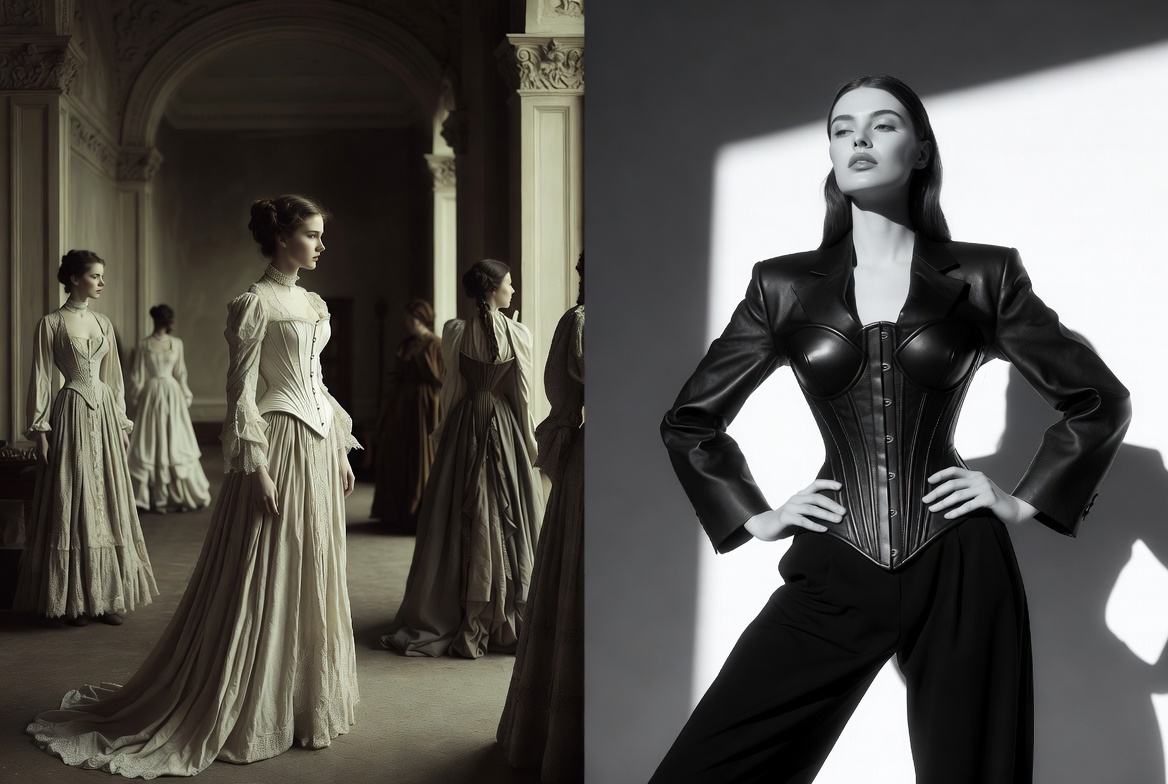
For most of its history, the corset was a piece of clothing nobody saw. Worn under layers of fabric, it shaped the body invisibly, dictating posture and silhouette while staying hidden from public view. Today the opposite is true. Corsets are worn on the outside, paired with blazers, jeans, and even tailored suits, and treated less as underwear and more as architecture for an outfit. Understanding how that shift happened says a lot about where corset fashion is heading next.
A Garment Built for Structure, Not Decoration
The earliest corsets were practical tools. Stiffened with whalebone, reed, or later steel boning, they existed to control posture and create a specific body shape that fit the fashion silhouette of the era. Comfort was not the priority — structure was. That same logic still drives corset construction today, just with different materials and a very different goal. Modern corsetry, especially in leather, borrows the same boning and lacing techniques but applies them in service of visible design rather than concealment.
This is the detail people often miss when they assume corsets are simply “tight tops.” A well-constructed corset is closer to a piece of wearable architecture. The boning channels, the cut of the panels, and the placement of the lacing all work together to create a shape — and that engineering is exactly what makes a corset look sculptural rather than flat, regardless of the fabric used.
Why Leather Changed the Conversation
Cotton, satin, and brocade corsets dominated for centuries because they were the materials available and because they suited the soft, romantic silhouettes fashion called for. Leather entered the picture later, and it brought something different: weight, structure, and a kind of visual confidence that fabric corsets rarely have.
A leather corset holds its shape with less internal boning because the material itself has body. It catches light differently than fabric, develops character as it’s worn, and reads as a statement piece rather than a foundation garment. This is part of why leather corsets have become a favorite among designers building bold, structured outfits — the corset stops being something worn under clothes and becomes the focal point of the look.
From Foundation Garment to Outerwear
The biggest shift in corset history isn’t technical, it’s cultural. Corsets moved from being hidden support structures to being deliberately visible design elements. This started slowly through alternative fashion subcultures and runway experimentation, then accelerated as mainstream fashion picked up structured silhouettes as a broader trend.
What used to be considered scandalous — wearing a corset as an outer layer — is now a standard styling choice. Editorial fashion, red carpet looks, and everyday street style all borrow from this idea: a corset worn over a shirt, layered with a jacket, or styled with wide-leg trousers reads as intentional and editorial rather than undergarment-on-display.
What This Means for How Corsets Are Designed Today
Because corsets are now meant to be seen, the design priorities have changed. Finishing matters more — exposed boning channels, visible lacing, and hardware details are now features rather than flaws to hide. Closures are designed to be part of the aesthetic, not just functional. And silhouette choices, like an underbust cut versus an overbust cut, are selected based on how the piece will be styled with other clothing, not just how it shapes the body underneath.
This is especially visible in leather corsetry, where the seams, stitching, and boning structure are often left exposed by design. A corset built to be worn as outerwear has to look finished from every angle, because there’s no outer layer hiding the construction anymore.
A Garment That Still Has Room to Evolve
The corset’s history is really a story about a single garment being repeatedly reinvented for new purposes. It started as structural underwear, became a symbol of restrictive beauty standards, was rejected, then reclaimed as a tool of self-expression and power. Each era used the same basic idea — boning, lacing, structure — to say something completely different.
That’s likely why corsets haven’t disappeared the way other historical garments have. The shape-defining mechanics are too useful to discard, and the visual impact is too strong to ignore. What changes is the context: today’s corset is chosen, styled, and worn in public on purpose, which is a very different relationship than the one earlier generations had with the same basic garment.
About the Author