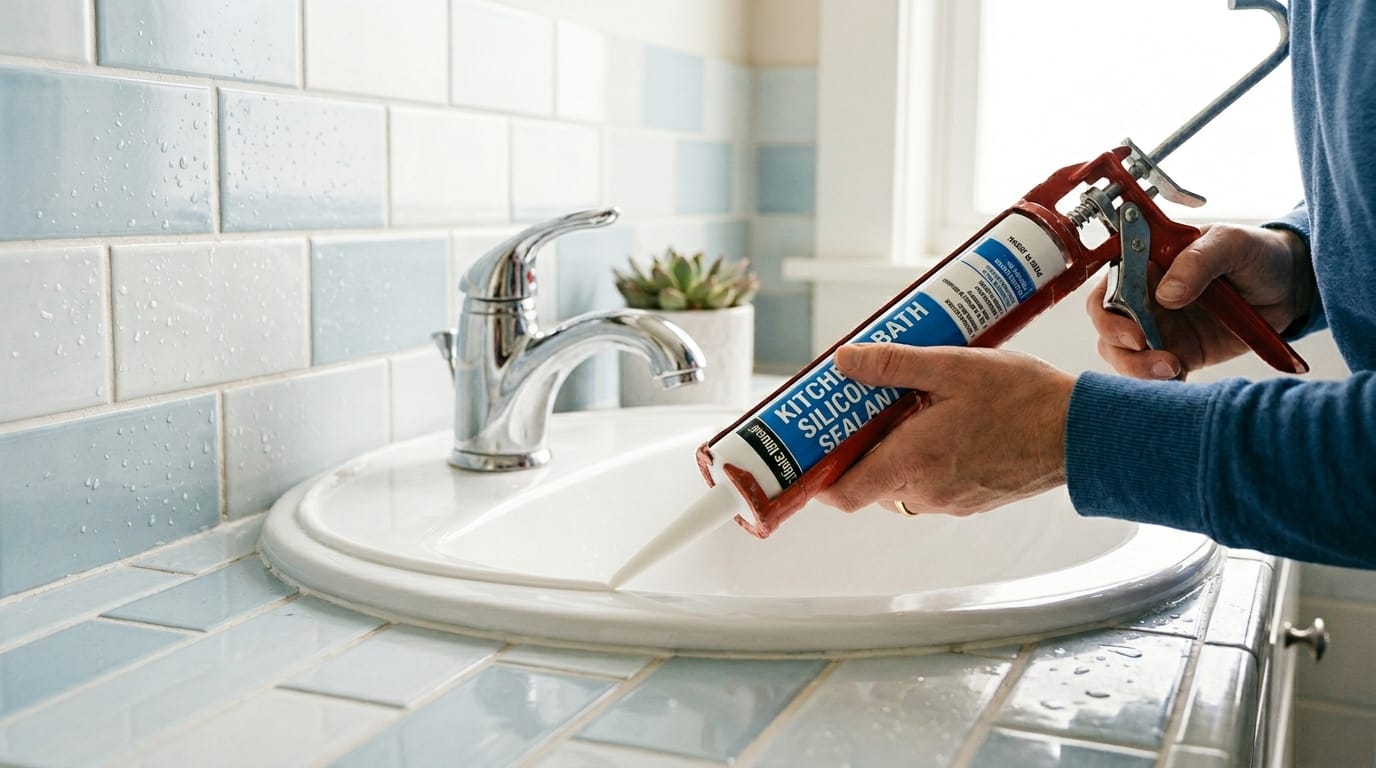
Have you ever worked hard to seal a leaky spot in your bathroom or around a window only to watch water sneak through again a short time later? Many people feel frustrated when this happens. That is why it is so helpful to understand how long does silicone take to dry. When you apply silicone, it first forms a thin skin on the surface that feels dry to the touch. This quick step is called skinning over or drying. After the skin appears, the silicone continues to harden deep inside through a longer process called curing. Full curing gives the material its real strength so it can hold back water, flex with movement, and last for years.
This friendly guide will walk you through clear times for different kinds of silicone and common jobs. You will also learn what changes the speed, plus safe ways to help it work better. By the end, you will feel confident and ready to make strong seals that keep your home dry and comfortable.
Understanding Silicone Types and Their Drying Behaviors
Silicone products come in several main groups, and each one has its own way of drying and curing. Learning these differences helps you pick the perfect kind for your project so the seal stays reliable and strong.
Acetoxy silicone is popular for many home repairs. It gives off a vinegar-like smell while it works. This type forms a skin very quickly, often in just 10 to 20 minutes. You can usually touch it gently after less than an hour, and it reaches good strength in about 24 hours. Many people choose it for glass, tiles, and non-metal surfaces because it sticks tightly.
Neutral cure silicone is gentler and has little or no strong smell. Its skin takes about 20 to 30 minutes to form. Full curing usually needs 24 to 48 hours and sometimes longer in certain conditions. This kind is safer for metal, stone, wood, and other materials that could be hurt by acid. It is a favorite for areas where a mild product matters most.
RTV silicone works well for car gaskets and engine parts. The letters mean it hardens at normal room temperature. High-temperature versions handle hot spots, while marine-grade ones resist salty water and bright sunlight. Most RTV types need at least 24 hours before heavy use, with some needing extra time for full inner strength.
Picking the right silicone makes a big difference. The wrong choice can lead to cracks, poor sticking, or even damage to the surface below. Taking a moment to read the package helps your repair stay beautiful and useful for a long time.
Exact Drying and Curing Times by Application
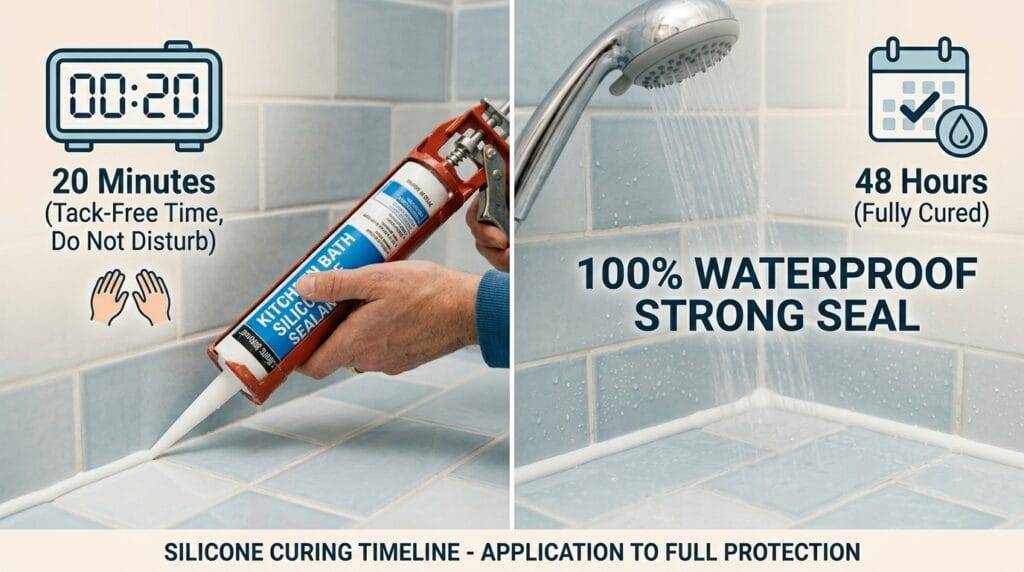
The time silicone needs changes depending on where you use it and how thick the layer is. Here are helpful guides for everyday jobs so you know what to expect.
Bathroom and kitchen seals often skin over in 10 to 30 minutes. The surface feels dry enough to touch after about one hour. For safety with water, wait at least 24 hours before using the shower or sink. Many careful workers wait 48 hours when the bead is thick so everything hardens completely.
Window and door caulking needs to flex with the building, so it gets 24 to 72 hours for full cure. The skin forms in 20 to 30 minutes, giving you time to smooth it nicely before it sets.
Automotive RTV gaskets usually skin in 10 to 20 minutes. Most need a full 24 hours before adding fluids or starting the engine. High-temp versions for hot areas may ask for a little more patience.
Special jobs like fish tanks or outdoor decks take extra care. Thick layers in these places can need up to seven days for the deepest parts to gain full strength, even when the top feels firm much sooner.
Remember that thinner beads always cure faster and more evenly than thick ones because air and moisture can reach every part more easily. Planning for the right thickness helps you avoid weak spots.
Key Factors That Affect How Long Silicone Takes to Dry
Several everyday things change how quickly silicone hardens. Warm temperatures help the curing reaction move along nicely. A room between 70 and 80 degrees Fahrenheit usually gives the best speed. Cooler air slows everything down and can make the wait twice as long.
Humidity also plays a kind role. Silicone needs some moisture from the air to cure properly. A medium level around 40 to 60 percent works wonderfully. Very dry air makes the process slower, while too much wetness can cause the skin to form so fast that soft areas stay trapped inside.
The surface you work on matters too. Smooth, clean, non-porous materials like glass let silicone cure at a steady pace. Porous surfaces such as wood or concrete can pull moisture and change the speed or the way it sticks.
Bead thickness is one of the biggest helpers or hurdles. Thin, even lines cure much faster than fat globs. Good airflow around the fresh silicone brings fresh air and moisture that support even hardening.
Because of these natural influences, checking your room conditions before you start leads to better, more predictable results.
Pro Tips to Speed Up Silicone Drying Safely

You can gently encourage faster curing without causing problems. Keep the room at a comfortable warm temperature using a safe heater if needed. Avoid direct hot air because it can create bubbles or weak places.
In very dry climates, set a small bowl of warm water nearby to add gentle moisture to the air. Never mist water straight onto the fresh silicone because that can spoil the smooth finish.
Try to apply thin layers whenever possible. For deeper gaps, build them up in steps and allow some time between each one. This method lets every part cure evenly and strongly.
Fast-cure formulas can be a good friend when you are in a hurry, but always make sure the product matches your surface. In hot summer weather, work in the shade so the silicone does not skin before you finish smoothing it.
These small, safe choices add up over time to give you stronger seals and shorter waiting periods.
Common Mistakes That Delay or Ruin Silicone Curing
Even careful people sometimes make simple mistakes that slow curing or weaken the final seal. Skipping a deep clean is one of the most common. Dirt, grease, soap, or old bits of material stop the silicone from sticking well, so it may peel or stay soft. A quick wipe with the right cleaner makes a huge difference.
Choosing the wrong type for the job creates trouble later. Using an acetoxy kind on metal can slowly damage the surface. Matching the product to the material keeps everything safe and long-lasting.
Applying too much silicone in one thick layer often leaves soft spots inside that never harden fully. This mistake leads to leaks and repeated work.
Getting the area wet too early is another frequent error. Even when the top feels dry, the inside may still be tender and wash away easily.
Using old or poorly stored tubes causes many failures. Check the date and keep extras in a cool, dry spot so they stay fresh and ready.
Reading the label every time prevents most of these problems and helps your project go smoothly.
Step-by-Step Application Guide for Optimal Drying
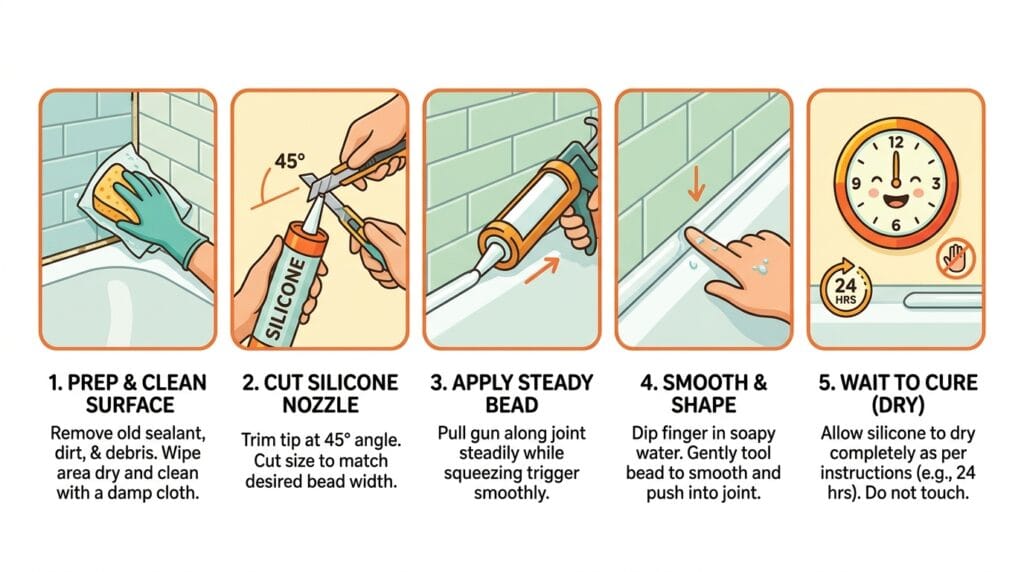
Good preparation sets the stage for success. Begin by cleaning the surfaces until they are bright and completely dry. Remove every trace of old silicone or dirt.
Cut the nozzle at a gentle 45-degree angle that matches the width of your gap. Place the tube in a comfortable caulking gun that feels easy in your hand.
Apply steady, even pressure while moving at a calm speed so the bead fills the joint nicely without air pockets.
Smooth the silicone right away using a damp finger or a special tool. This step presses it firmly against the sides for strong sticking and creates a neat, attractive finish.
After smoothing, protect the fresh work from dust and accidental bumps. Keep the room temperature steady and give the full recommended time before putting the area back into use. Following these steps helps the silicone dry evenly and stay strong for many years.
When Can You Use It? Safety and Testing Guidelines
Waiting the right amount of time keeps your repair safe and effective. For ordinary home jobs, 24 hours is a good minimum before light water contact. Busy areas like showers feel more secure after 48 hours.
A simple touch test gives helpful clues. Press the edge gently with a clean finger. If it feels firm and springs back, the seal is gaining strength. You can also place a tiny drop of water on the edge. When the water beads up instead of soaking in, the protection is working well.
Big projects such as aquariums or exterior walls need several extra days so the deepest parts reach full power. Many believe everything is ready in 24 hours, but the inner layers often continue curing for days afterward.
This patient approach protects your work and brings peace of mind.
Product Recommendations and What to Look For on Labels
Clear labels share important details like skin time, full cure time, and best uses. Search for low-odor choices for inside the house or paintable versions when color is needed. Fast-cure options help busy families finish projects quicker.
Newer formulas available in 2026 cure more smoothly and handle changing temperatures better than older ones. Store tubes standing upright in a cool place so they perform well when you need them next.
Buying fresh products from respected makers and checking dates ensures reliable results every time.
Troubleshooting: What to Do If Silicone Isn’t Drying
When silicone stays sticky longer than expected, low humidity, cold air, or hidden dirt is often the cause. Oil or leftover residue can also block proper curing.
If you notice this issue, gently remove the soft material with a plastic scraper. Clean the spot thoroughly once more. Then apply fresh silicone under better conditions.
For difficult spots or important repairs, calling a professional can save time and prevent repeated efforts.
FAQs
Why does the top of silicone dry faster than the middle?
The outer skin protects the material while moisture slowly reaches deeper parts. This natural process is why full curing takes longer than skin time.
Can I use silicone outdoors in cold weather?
Cold slows curing a lot. Try to choose a milder day or use a product made for lower temperatures and give extra waiting time.
How do I know if my silicone is expired?
Check the date on the tube. Old silicone may have a funny smell, hard lumps, or fail to cure properly.
Is there a way to make silicone cure faster in winter?
Gentle room warmth and medium humidity help. Avoid strong heat sources that can damage the material.
Will silicone stick to painted walls?
It depends on the paint and surface. Clean the area well and test a small spot first for best adhesion.
How long before I can put pressure on a new silicone gasket?
Wait the full cure time listed on the package, usually 24 hours or more, so it can handle movement without failing.
Does humidity really make silicone cure better?
Yes, a moderate amount of moisture in the air helps the chemical reaction. Very dry rooms slow it down noticeably.
What should I do with leftover silicone in the tube?
Wipe the nozzle clean, seal it tightly, and store it upright in a cool place. This keeps it usable for future small jobs.
Conclusion and Quick Reference Cheat Sheet
Understanding how long does silicone take to dry gives you the power to create beautiful, lasting seals. The surface skins quickly, but full inner strength needs your patience. Choose the correct type, prepare surfaces with care, apply even beads, and allow enough time. These steps lead to repairs you can trust.
Quick Cheat Sheet
- Skin formation: 10–30 minutes
- Touch dry: 30–60 minutes
- Full cure: 24–48 hours (up to 7 days for thick or special uses)
- Best conditions: 70–80°F with 40–60% humidity
- Top tips: Clean well, keep layers thin, wait before water, read labels
You have everything you need to succeed. Take a deep breath, gather your supplies, and enjoy making strong fixes around your home. Your efforts will bring comfort and pride for a long time to come.
Disclaimer: This article offers general friendly information based on typical experiences and product guidelines. Always follow the exact instructions on your specific silicone package because results can vary with conditions and materials. When working on important or high-stakes jobs, test a small area first or ask a professional for advice to keep everything safe and secure.
Explore More
- Anticimex Oy / Indoor Quality Service Oy Yritysostot – Full Details & Analysis
- What is Gelboodu? Full Guide to the Hottest Anime Booru Site
About the Author