Many people want to ride a bike but feel worried about their skills. They may not know how to balance well, turn safely, or ride on busy roads. This makes cycling less fun and sometimes unsafe. That is why learning the right way matters so much. One helpful tool that supports cycling practice is the Bikeability approach, which includes training ideas that apps and programs can follow. It helps beginners build strong skills step by step. In this article, you will learn simple ways to improve your cycling. We will talk about basic skills, common problems, and easy tips that anyone can use at home or outside. Because good skills bring more confidence and joy, many riders feel happier once they learn them properly.
Why Cycling Skills Matter for Everyone
Cycling feels wonderful when you ride without fear. You can go to the market, visit friends, or enjoy fresh air in the park. But if you struggle with balance or stopping quickly, small problems can turn into big worries. For example, a child who wobbles on the bike may fall and feel scared to try again. An adult who does not check traffic before turning may face danger on the road.
That is why building skills slowly makes a real difference. Good balance helps you stay steady even on bumpy paths. Clear hand signals let drivers know what you plan to do next. Over time, these small habits keep you safe and let you enjoy longer rides. Another thing is that strong skills help you ride in different places, like quiet streets or busier areas near home. Because roads change every day with more cars and people, learning practical ways to share space becomes very useful. Many families notice that after some practice, kids ride with smiles and parents worry less.
What Makes Bikeability Training Special
Bikeability training focuses on real-life cycling needs. It starts with easy steps in safe places and slowly moves to busier spots. This method works well because it matches your current level and helps you grow without rushing. For instance, beginners first learn to sit straight and pedal smoothly in a quiet yard or playground. After that, they practice looking around and signaling with their hands.
The training usually follows clear levels that build on each other. In the first level, you work on basic control like starting, stopping, and turning without traffic nearby. This means you can focus only on your bike and body movements. Next comes practice on quiet roads where you learn to ride in a straight line and pass simple spots like driveways. Later levels teach you how to handle busier roads with more cars and turns. Because each step feels manageable, riders gain confidence naturally instead of feeling overwhelmed.
This kind of training also teaches important habits like choosing the right clothes and checking your bike before every ride. For example, you learn to look at your brakes and tires so nothing surprises you later. In addition, it covers how to watch for other road users and make smart choices about where to ride. That is why many people say the skills stay with them for years and make daily cycling easier and more enjoyable.
Basic Skills You Can Practice Every Day
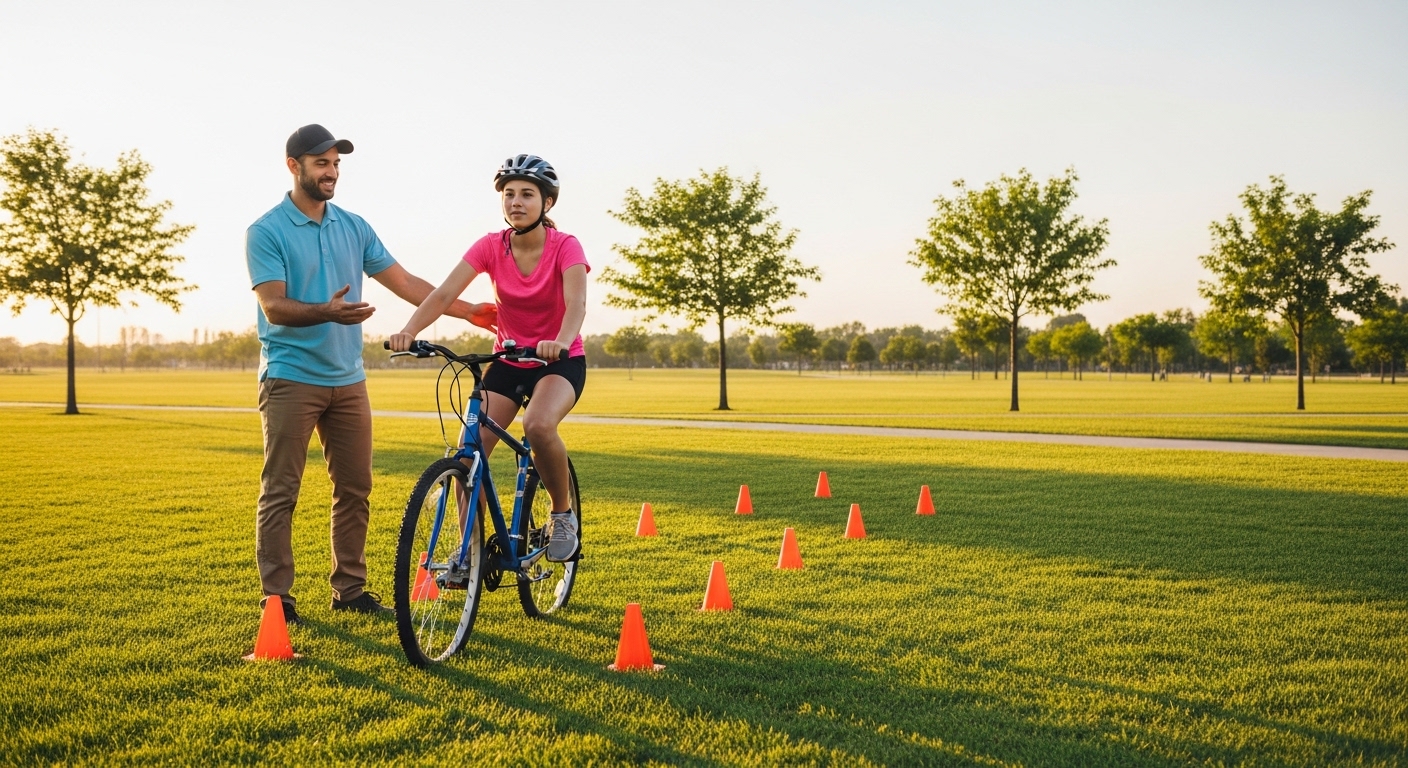
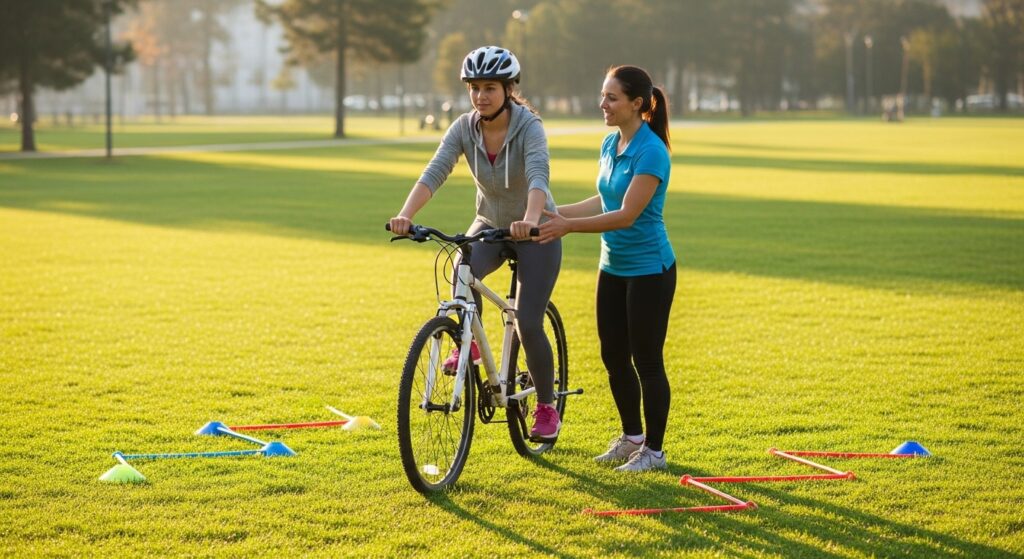
Start with simple balance exercises that need no special tools. Find a flat, open space like a park or empty school ground. Sit on your bike and place one foot on the ground for support. Gently push off and try to glide a few meters while keeping your body relaxed. Over time, lift your feet higher and feel how the bike stays steady when you move forward. This exercise helps because forward motion naturally keeps you balanced, just like when you run and do not fall.
Next, work on starting and stopping smoothly. Put one foot on the pedal and the other on the ground. Push down gently while looking straight ahead. When you want to stop, squeeze both brakes evenly and place your feet down. Practice this many times so it becomes automatic. For example, imagine you are stopping at a red light or to let a friend cross. Smooth stops prevent sudden jerks that can make you lose control.
Another useful skill is turning safely. Look in the direction you want to go first, then lean your body slightly and turn the handlebars. Start with wide, gentle turns in an open area. After that, make them tighter as you feel more sure. This means your arms and shoulders stay loose, which helps the bike follow your eyes naturally. Many beginners forget to look first, but once they remember, turns feel much easier and safer.
How Apps and Digital Tools Support Your Practice
Modern tools like training apps can make learning more fun and organized. Some apps let you track your rides and see small improvements over weeks. They may show maps of safe routes near your home or give short video tips for common problems. Because you can use them anytime, even for ten minutes a day, progress happens steadily without needing a big schedule.
For example, you might open the app before a ride to review one skill, like hand signals. Then you go outside and try it on a real path. Later, the app can remind you to check your posture or suggest gentle exercises for stronger legs. In addition, some tools connect with simple sensors on your bike to count how steady your pedaling feels. This feedback helps you notice mistakes early, such as leaning too much to one side.
Over time, these digital helpers turn practice into a habit. They also let you set small goals, like riding one kilometer without stopping or making five smooth turns. Because the goals feel reachable, you stay motivated and avoid giving up too soon. Another benefit is sharing your progress with family or friends through the app, which makes learning a happy group activity.
Common Mistakes Beginners Make and How to Fix Them
One frequent mistake is looking down at the front wheel instead of ahead. When you look down, your body follows and the bike wobbles more. Instead, keep your eyes up on the path in front of you. This simple change improves balance quickly because your brain uses far vision to stay steady.
Another common error is gripping the handlebars too tightly. Tight hands make your arms tired and movements stiff. Relax your fingers and shoulders while riding. For example, imagine holding a delicate egg in each hand—you would not squeeze hard. This keeps your ride smooth and comfortable for longer distances.
Many new riders also forget to signal clearly before turning or stopping. Drivers and other cyclists need time to understand your plans. Practice raising your left or right arm straight out well before you change direction. After some days, it becomes natural, and you feel safer knowing others can predict your moves.
Braking too hard with only the front brake is another issue that can cause falls. Always use both brakes together in a gentle squeeze. This means the bike slows down evenly without the back wheel lifting. Practice in a safe spot until the feeling becomes familiar.
Building Confidence for Real Road Riding
Once basic skills feel easy, move to quiet roads near home. Choose times when traffic is light, such as early morning or late afternoon. Ride close to the side but leave enough space for your handlebars and any sudden stops. Always watch for parked cars that might open doors suddenly.
Next, practice at simple junctions where you can stop and look carefully in all directions. Look left, right, and left again before crossing. Use clear hand signals so others know you plan to turn. Because you prepare ahead, these moments feel less stressful over time.
For busier areas, plan short trips first and build up slowly. For instance, ride to a nearby shop during quiet hours. Notice how you position yourself on the road to stay visible. In addition, wear bright clothes and use lights if the sky is dim. These small choices help drivers see you clearly and give you extra peace of mind.
Practical Tips to Improve Faster at Home
You do not need fancy equipment to practice many skills indoors or in your yard. Use a balance board or simply stand on one foot while holding the bike for a few seconds each day. This strengthens your legs and core without riding. Another easy exercise is pedaling slowly while watching a straight line on the ground. It trains your eyes and body to work together.
Check your bike every week in simple ways. Make sure tires have enough air by pressing them with your thumb. Test brakes by rolling slowly and stopping. Clean the chain with a dry cloth so it moves quietly. These quick checks prevent surprises and keep your rides smooth.
Set a weekly routine that mixes fun and practice. One day focus on balance games with friends. Another day ride a short loop and count how many good signals you make. Because variety keeps things interesting, you will look forward to each session instead of seeing it as hard work.
Staying Safe and Enjoying the Ride
Safety grows when you combine skills with smart habits. Always wear a helmet that fits well and sits level on your head. Choose clothes that fit close to your body so nothing catches in the wheels. In wet weather, slow down more and leave extra space for stopping.
Plan routes that match your current skills. Start on paths with bike lanes or quiet neighborhoods. As you grow stronger, try slightly busier streets during safe times. This gradual approach means you challenge yourself without taking big risks.
Remember to drink water and rest when you feel tired. Tired muscles make mistakes more likely, so short, happy rides often bring better results than long, exhausting ones. Over time, your body adapts and longer rides feel natural.
FAQ About Improving Cycling Skills
What is the best way for a complete beginner to start learning cycling skills?
Begin in a flat, open space with no cars. Focus first on balancing and gliding with feet off the pedals for short distances. Practice starting and stopping many times until they feel easy. After that, add gentle turns. Short daily sessions work better than one long tiring practice.
How long does it usually take to feel confident on the bike?
Every person learns at a different speed. Many beginners notice better balance after one or two weeks of regular practice. Full confidence on quiet roads often comes after a few months of steady effort. The important part is to celebrate small wins along the way.
Can adults learn cycling skills just as easily as children?
Yes, adults can learn very well. They often understand safety rules faster because of life experience. The same step-by-step method works for everyone. Many adults enjoy the freedom cycling brings once basic control feels natural.
Do I need special equipment to practice at home?
No expensive tools are necessary at first. A safe bike, a helmet, and open space are enough. Later, you can add simple items like cones for turning practice or use free apps for tips and tracking.
What should I do if I feel scared on busier roads?
Start with very short rides in light traffic and build slowly. Practice looking and signaling in quiet spots first. Ride with a more experienced friend who can give gentle advice. Over time, fear decreases as skills and familiarity grow.
How can I help my child improve their cycling skills safely?
Join them in practice sessions and make it fun with games. Praise their efforts instead of pointing out every mistake. Choose safe areas and always wear helmets together. Short, positive sessions help children stay eager to learn.
Is regular practice more important than long practice sessions?
Yes, short daily or every-other-day practice usually brings faster improvement. Your body and mind remember skills better with steady, gentle repetition instead of rare long efforts.
Final Thoughts on Your Cycling Journey
Learning cycling skills opens many happy doors. You gain freedom to move around your neighborhood, enjoy nature, and stay active every day. The key is to start small, practice often, and be patient with yourself. Each smooth turn or steady balance moment builds toward bigger confidence.
Remember that every skilled rider once felt unsure too. With simple steps, real examples from daily life, and steady effort, you can reach a point where riding feels natural and joyful. Keep exploring new paths and sharing rides with others when you can. Cycling brings fresh air, good health, and wonderful memories when you feel ready and safe.
Disclamer
This article shares general information about cycling skills and training approaches based on common practices. It is not specific advice for any individual. Always follow local traffic laws, wear proper safety gear, and consult qualified instructors or medical professionals for personalized guidance. Results vary by person, and safe practice is the top priority.
Explore More
- Aston Apps: Login, Download & Access Aston Apps Anywhere (2026 Guide)
- Make Clients Remember You: Branding Apparel and Merch Strategies for Solar Installation Teams
- Premier Sports App: Firestick, Samsung TV, Sky, LG, Roku, Xbox & PS4 Setup, Virgin Media, Not Working Fix Guide
About the Author