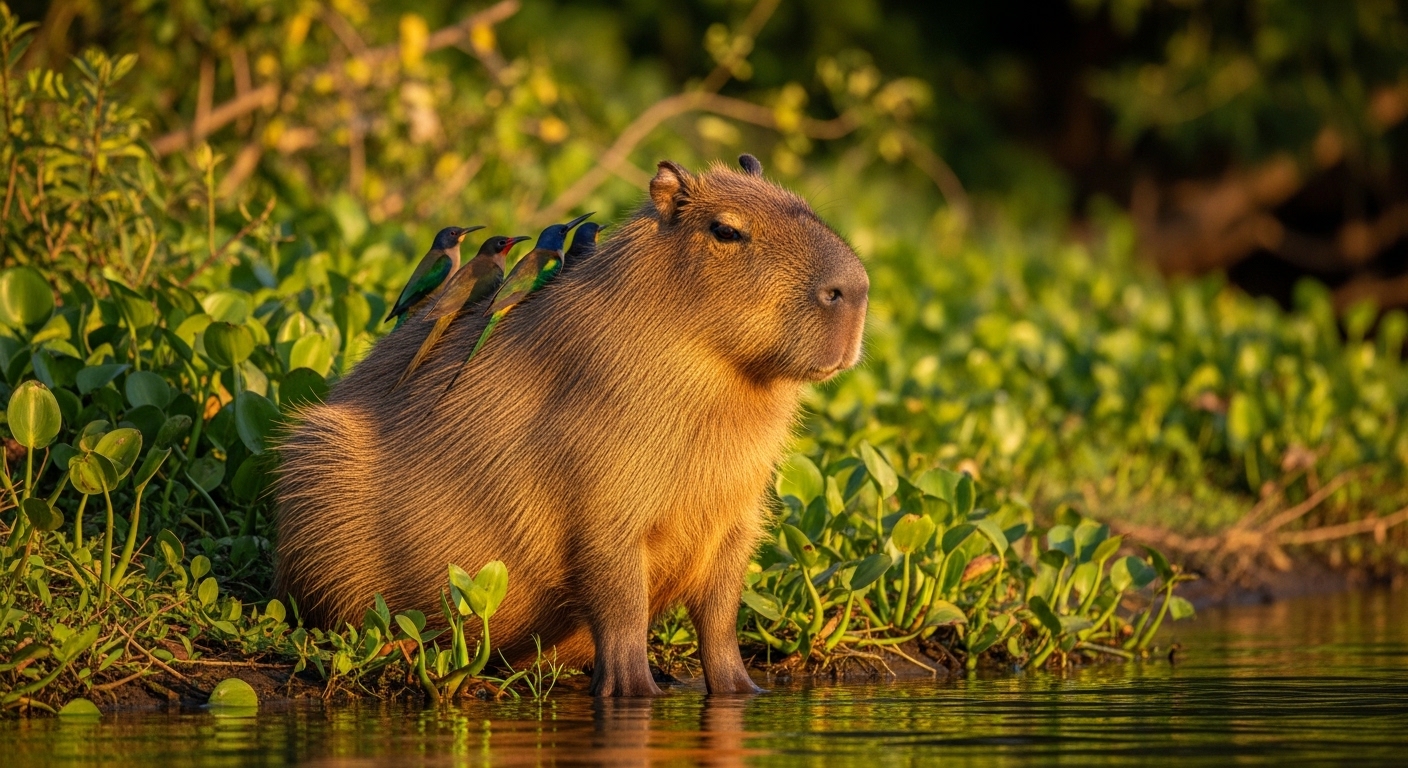
Have you ever seen a picture of a big, relaxed animal just chilling next to a crocodile? That friendly giant is the capybara. People call it the world’s largest rodent, and it really lives up to that name in the most surprising ways. In 2026, this animal keeps winning hearts online and teaching us lessons about nature. It shows how different creatures can share space peacefully.
Capybaras live in South America, near rivers, lakes, and wetlands. They look a bit like oversized guinea pigs with barrel-shaped bodies and short legs. Also, they love water more than most animals do. This means they spend hours swimming or resting by the shore. Because of their calm personality, they seem to get along with almost everyone in the wild. That is why videos of them hanging out with birds, monkeys, and even crocodiles go viral every year.
Over time, people have learned more about these gentle animals. Recent studies from 2025 and 2026 highlight how they shape their environment and stay safe in tricky places. If you are curious about nature or just love cute animals, the capybara story feels fresh and fun. Let us explore what makes this rodent so special.
What Makes the Capybara the Largest Rodent in the World?
The capybara holds the title as the biggest rodent alive today. Adult ones usually grow about four feet long and stand two feet tall at the shoulders. They weigh between 77 and 143 pounds on average. That is roughly twice the size of a beaver, the next biggest rodent.
Imagine a pet guinea pig, but blown up to the size of a small dog. That gives you a good picture. Their bodies are heavy and round, perfect for life in wet areas. In addition, they have short, coarse brown fur that dries quickly after a swim. Their eyes, ears, and nostrils sit high on their heads. This setup lets them breathe and watch for danger while most of their body stays underwater.
Another thing is their feet. They have slightly webbed toes that help them paddle through rivers and swamps with ease. Their back legs are a bit longer than the front ones, which makes walking on land steady but swimming even better. That is why capybaras feel at home both in water and on grassy banks.
Recent observations in 2025 show that some wild capybaras reach even heavier weights in rich wetland areas. Females often grow slightly bigger than males. This size helps them stay safe from many predators, but they still need smart habits to survive.
Where Do Capybaras Live and How Do They Spend Their Days?

Capybaras make their homes across much of South America, from Panama down to northern Argentina. They skip Chile, but you can find them in forests, flooded savannas, and wetlands everywhere else. They stay close to water because it gives them food, safety, and a place to cool off.
During the day, they rest under plants or in shallow water to avoid the hot sun. They become more active in the early morning and late evening. This pattern, called crepuscular behavior, helps them stay comfortable. For example, a group might graze quietly at dawn, then slip into a river when the heat rises.
They live in herds of about 10 to 20 animals, though bigger groups form near good water sources. A dominant male usually leads the group and watches over everyone. The herd works together for protection. One animal spots danger and barks or whistles to warn the others. Next, everyone can dive into the water and swim away fast.
In 2026, researchers note that capybaras adapt well to changing habitats. Some even appear in urban edges where people and nature meet. This shows their flexible nature, but it also brings new challenges for both animals and humans.
What Do Capybaras Eat Every Day?
Capybaras are herbivores, which means they eat only plants. They munch on grasses, aquatic plants, fruits, and tree bark. A full-grown capybara can eat up to eight pounds of fresh grass in one day. That is a lot of chewing!
Their teeth never stop growing, just like other rodents. Grazing wears the teeth down naturally. Because grasses can be tough to digest, capybaras have a special trick. They eat their own poop in the morning. It sounds strange, but that soft poop contains helpful bacteria from the first digestion. This second round helps them get more nutrients from the same food.
Think of it like brewing tea twice to get every bit of flavor. That simple habit keeps them healthy on a plant-only diet. In dry seasons, they also nibble melons, squash, or grains if they find them near farms. Recent studies from 2025 highlight how their grazing actually helps shape wetland plants. They keep certain grasses short, which lets other plants grow and keeps the area diverse.
Why Are Capybaras So Social and Friendly?
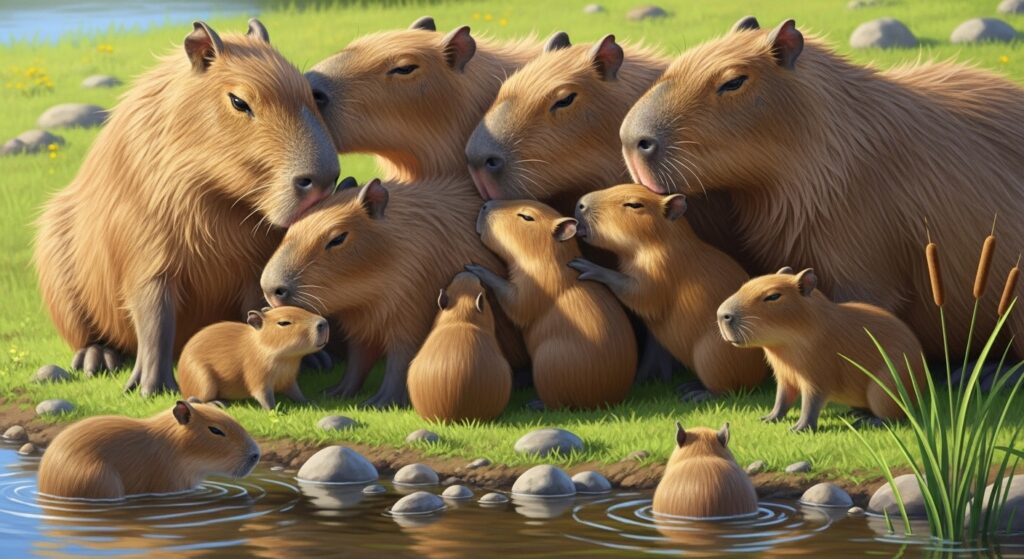
One of the best things about capybaras is their peaceful personality. They live in tight family groups where they groom each other, play, and share care of the young. Pups are born after about 100 to 110 days of pregnancy. A mother usually has three to eight babies at a time. The whole herd helps watch over them.
This social life gives them strength. Alone, a capybara might feel nervous, but together they feel safe. They communicate with barks, chirps, whistles, and purrs. These sounds help the group stay connected even when spread out along a riverbank.
Because they are herbivores and not aggressive, many other animals feel comfortable around them. Birds perch on their backs to eat insects. Monkeys and even wild boars sometimes share space without trouble. Their calm vibe makes the capybara seem like the friendliest giant in the animal world.
The Famous Capybara and Crocodile Connection
You have probably seen those cute photos or videos of a capybara resting right beside a crocodile. It looks like true friendship, and in some ways, it is a special kind of peace. But the real story mixes calm behavior with smart survival.
Crocodiles are predators, yet they often ignore adult capybaras. Why? Adult capybaras are large, and chasing one takes a lot of energy for little reward if easier food is around. Capybaras stay alert in groups and can swim away quickly. They hold their breath underwater for up to five minutes. This means they escape into rivers where crocodiles might not bother to follow.
In addition, capybaras sometimes use crocodiles as resting spots or even climb on them briefly. Scientists in recent years describe this as a kind of truce based on energy calculations rather than real buddies. The crocodile saves strength for better prey, and the capybara avoids unnecessary stress. Baby capybaras stay more careful because they are smaller and easier targets.
Think of it like two neighbors who do not fight but also do not invite each other to dinner. They share the same yard peacefully most of the time. That calm coexistence surprises many people and shows how nature balances risks every day. In 2026, more videos from South American wetlands capture these moments, reminding us that wild life is full of quiet understandings.
How Capybaras Help Their Ecosystem
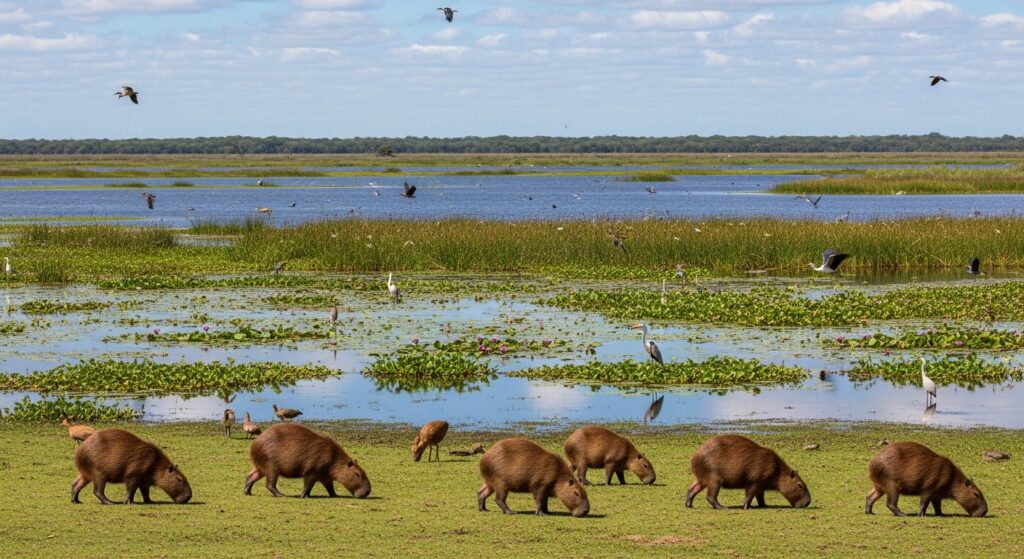
Capybaras do more than just eat and swim. As big grazers, they influence the plants around them. Their eating habits keep grasslands from growing too tall or thick in some spots. This creates space for different plants and helps the whole wetland stay healthy.
Birds and small animals find better hiding spots or food because of these changes. In places like the Iberá Wetlands in Argentina, studies from 2025 show capybaras play a key role in vegetation patterns. When predators like jaguars return to an area, this balance might shift, but the capybara still remains an important part of the web.
Their poop also adds nutrients back to the soil and water. Over time, this supports more plant growth and keeps the cycle going. That is why protecting capybara homes helps many other species too.
Common Challenges Capybaras Face Today
Even though capybaras are listed as least concern, they deal with real pressures. People sometimes hunt them for meat or leather in certain areas. Habitat loss from farming or cities can push them closer to human spaces.
In 2025 and 2026, researchers studied capybaras living near towns. They adapt by finding new water sources, but this can lead to conflicts with gardens or roads. Groups work on better ways for people and capybaras to share land safely.
Another thing is climate shifts that change water levels in wetlands. Capybaras need steady access to water, so dry spells make life harder. Still, their strong social bonds and quick breeding help populations stay stable in many places.
Fun and Surprising Facts About Capybaras
Here are a few extra details that make capybaras even more interesting. Their scientific name, Hydrochoerus hydrochaeris, actually means “water pig.” It fits perfectly because they love splashing around.
They can run surprisingly fast on land when needed, even though they look slow and relaxed. Also, they are good at holding their breath while diving. This skill saves them from danger many times.
In captivity, they often live longer, up to 12 years, compared to about 7 to 10 years in the wild. Their gentle nature makes them popular in some zoos, where visitors love watching them interact calmly with other animals.
Another fun note: capybaras sometimes let smaller birds clean ticks off their skin. It is like a free spa service that helps both sides.
How to Appreciate Capybaras Responsibly
If you want to learn more about capybaras, the best way is through respectful wildlife watching or reading from good sources. Never try to approach wild ones too closely, because they are still wild animals that need space.
For school projects or family learning, look at photos and videos from safe distances. Teachers can use the capybara as an example of peaceful coexistence in nature. Small businesses that support eco-tourism in South America often share stories that help protect these animals without causing harm.
FAQ About Capybaras
How big can a capybara really get?
Most adults weigh 77 to 143 pounds and measure up to four and a half feet long. Some wild ones grow even heavier in good habitats.
Do capybaras really eat their own poop?
Yes, they do it in the morning to get extra nutrients from tough grasses. It is a natural part of their digestion.
Are capybaras dangerous to people?
No, they are shy and gentle. They usually run or swim away instead of fighting.
Can capybaras swim underwater for long?
They can hold their breath for nearly five minutes. This helps them escape predators safely.
Where can I see capybaras in real life?
You can find them in wetlands and zoos across South America or in some international wildlife parks that care for them properly.
Why do crocodiles not always eat capybaras?
Adult capybaras are big, and the chase costs too much energy. The animals often share space without conflict.
How long do baby capybaras stay with the group?
The herd helps raise them together, and young ones learn social skills while staying close to adults.
Wrapping Up the Wonderful World of the Capybara
The capybara stands out as the world’s largest rodent with its calm ways and surprising friendships. From grazing in wetlands to sharing riverbanks with crocodiles, these animals show us that nature often finds balance in gentle ways. Their social herds, smart swimming skills, and helpful role in the ecosystem make them truly special.
In 2026, we keep discovering new details about how they live and adapt. Whether you love animals, enjoy nature videos, or just want to smile at a peaceful scene, the capybara offers plenty of joy and lessons. Next time you see one resting quietly, remember the hard work behind that calm look.
Take a moment to appreciate these friendly giants from afar. They remind us that getting along is possible, even in the wildest places.
Disclaimer: This article is for informational and educational purposes only. The information is based on 2026 trends and available knowledge about capybaras. Technology, scientific understanding, and wildlife conditions change quickly, so please verify the latest details from official sources such as wildlife organizations or research institutions. This article does not endorse or promote any specific tool, service, product, or activity. Readers should always respect copyright laws, animal welfare guidelines, and local terms of service when observing or learning about wildlife.
Explore More
- What Is Temey_07? Full Details, Uses & Benefits Explained
- Who Is the Palo Alto Networks Chief Marketing Officer 2024? Complete Profile
About the Author