Imagine running a transport business with several trucks on the road every day. You think everything is fine until one day the rules catch up with you. That is exactly what happened in the case of Byron Thomas Williams and his company, BTW Transport Ltd. In 2025, a public inquiry looked closely at how the business handled vehicle licensing and safety. The results were serious. Byron Thomas Williams vehicle licensing penalties included the loss of the company’s operator licence and a 12-month ban that stopped both the business and its director from working in this field.
This story matters a lot in 2026 because many small transport operators still struggle with the same rules. One small mistake can grow into big trouble. After that, it affects jobs, income, and even personal reputation. In this article, we will walk through what really happened, why it became so costly, and what everyday lessons we can learn. We will keep everything simple so you can follow along easily, whether you drive for a living or just want to understand how these rules work.
What Led to the Byron Thomas Williams Vehicle Licensing Penalties?
Byron Thomas Williams served as the sole director of BTW Transport Ltd, a company that held a standard national goods vehicle operator’s licence. This licence lets businesses move goods legally across the UK with heavy vehicles. For a long time, the company operated with up to seven vehicles.
However, things started to go wrong with basic responsibilities. The public inquiry found repeated problems with vehicle maintenance. Trucks need regular checks to stay safe on the road. When these checks are missed, brakes, tyres, or lights can fail at the worst moment. In addition, driver management fell short. Companies must make sure drivers follow hours of work rules and keep proper records.
Another big issue came from regulatory compliance. This means following every law about licences, taxes, and vehicle documents. Over time, small oversights added up. For example, the inquiry heard that vehicles sometimes ran without the right paperwork. That is like trying to drive your family car with an expired insurance card – it feels okay until someone stops you.
Because of these ongoing failures, the Deputy Traffic Commissioner in the North East of England stepped in. He held a public inquiry to examine the evidence. During the process, it became clear that the company had not been fully honest in some statements. This lack of trust made the situation even worse.
The Day the Licence Was Taken Away
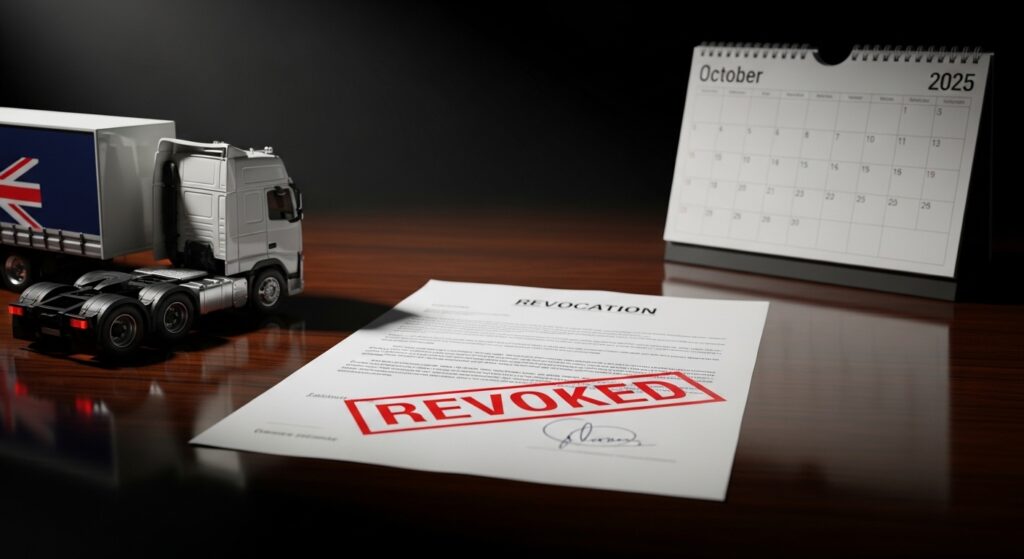
On 22 October 2025, the decision came down hard. The operator’s licence for BTW Transport Ltd was revoked at 23:45 that evening. This means the company could no longer legally use its vehicles for paid haulage work.
After that, a 12-month disqualification took effect. The company was banned from holding or applying for any new operator’s licence until 22 October 2026. Think of it like a timeout in sports, but for business. During this period, the trucks had to stay off the road for commercial jobs, or the company risked even bigger fines.
Byron Thomas Williams faced personal consequences too. As the director, he received the same 12-month disqualification. He could not hold an operator’s licence himself, and he could not act as a director for any company that needed one. This hits close to home because many family-run transport firms rely on one main person to keep things moving.
In addition, the former transport manager, Nichola Ogilvie, lost her good repute. She was disqualified from acting as a transport manager until further notice. Good repute is a key idea in this industry. It shows that a person is trustworthy and follows the rules. Once it is gone, it becomes very hard to get back.
These Byron Thomas Williams vehicle licensing penalties went far beyond a simple warning. They stopped the entire operation in its tracks.
Why the Costs Feel So Shocking in Money Terms
People often ask about the £££ side of things. While official records focus on the licence loss and disqualification, the real financial hit comes from many directions at once.
First, without a valid operator’s licence, the business cannot earn money from haulage. Trucks sit idle, and contracts with customers disappear. For a small company with seven vehicles, that lost income can add up quickly to thousands of pounds each week.
Next, there are ongoing costs even when the business is stopped. You still pay for insurance, storage, and basic maintenance so the vehicles do not fall apart. If drivers lose their jobs, the company might face redundancy payments or legal claims.
Another hidden cost involves trying to restart later. After the 12-month ban ends, applying for a new licence takes time, money, and fresh evidence that all problems are fixed. You need new systems for maintenance records, driver training, and compliance checks. Many operators hire consultants or buy software to prove they have improved. All of that costs extra.
In addition, the inquiry mentioned issues with excise duty, which is the road tax for heavy vehicles. Running vehicles without proper duty can lead to separate fines from other authorities. Over time, these extra penalties pile on top of the main licensing problems.
One simple analogy helps here. Imagine your family car gets clamped because you missed a parking ticket. You pay the fine, but you also lose wages if you cannot drive to work. For Byron Thomas Williams, the scale was much bigger because it affected a whole fleet and several people’s livelihoods.
That is why the total cost feels shocking. It is not just one fine on paper. It is lost business, extra expenses, and a year of uncertainty.
Common Mistakes That Led to These Penalties
Looking back at the case, several clear mistakes stand out. Understanding them can help others avoid the same path.
One big error was poor vehicle maintenance records. Rules say you must keep detailed logs of every check and repair. When inspectors ask for proof, you need to show it quickly and clearly. In this case, the evidence suggested the company did not always meet those standards.
Another mistake involved continuing operations after early warnings. The inquiry found that vehicles kept running for three weeks even after notice of a previous revocation in 2024. This deliberate choice damaged trust with the authorities. It is like ignoring a red light – you might get through once, but eventually it catches up.
Driver management also slipped. Companies must monitor hours, rest periods, and training. When these areas weaken, safety suffers, and regulators notice.
In addition, attempts to mislead during the inquiry made things worse. Honest mistakes can sometimes be fixed with promises to improve. But when the commissioner feels the truth was hidden, the penalties become stricter.
For beginners in the transport world, these examples show why it pays to stay organised from day one. Keep every document in one safe place. Set calendar reminders for renewals. Train your team regularly. Small habits like these prevent big headaches later.
What the 12-Month Disqualification Really Means for Daily Life
The disqualification period lasts a full year. During this time, Byron Thomas Williams could not run or manage any transport operation that needs an operator’s licence.
This affects personal life too. Many directors use their experience to advise other businesses or take similar roles. The ban blocks those options as well.
For the company, it means finding other ways to use the assets. Some owners sell vehicles or rent them out for non-licensed work, but that brings its own challenges and lower income.
After the ban ends in October 2026, the road back is not automatic. The company and director must prove they have learned from the experience. This often includes new training courses, updated policies, and sometimes a fresh transport manager with a clean record.
That is why many people in the industry now talk about this case as a wake-up call. In 2026, authorities use better digital tools to track compliance. Cameras, electronic logging, and shared databases make it harder to hide problems. This means operators need to be more careful than ever.
Simple Steps to Stay Compliant and Avoid Similar Trouble
You do not need to be an expert to protect your business. Here are some easy steps that anyone can follow.
First, create a simple checklist for each vehicle. Include tyre pressure, lights, brakes, and oil levels. Mark the date of every check and who did the work. Keep these records for at least 15 months.
Next, set up reminders for licence renewals and tax payments. Use a phone app or wall calendar so nothing slips through.
Another helpful idea is to hold short team meetings every month. Talk about any new rules or problems that came up. This keeps everyone on the same page.
In addition, consider basic training for yourself and your drivers. Many free or low-cost courses cover hours of work, safety, and record-keeping. Over time, these habits become second nature.
If you ever receive a warning letter from authorities, act on it right away. Seek advice from someone who knows the rules well. Ignoring it only makes the situation bigger, as we saw in the Byron Thomas Williams vehicle licensing penalties case.
For small businesses, these steps feel like extra work at first. But they save money and stress in the long run. Think of them as insurance for your livelihood.
How This Case Affects Others in the Transport Industry
The story of Byron Thomas Williams has spread quickly among hauliers. Many operators now double-check their own systems. They ask questions like: Are my maintenance records complete? Do my drivers understand the latest rules?
In 2026, the industry feels more pressure to stay clean. Traffic commissioners share decisions publicly, so one case can influence how others behave.
Young drivers or new business owners pay special attention. They see that even experienced people can face serious penalties if standards slip. This encourages better training from the start.
Another positive change is that some companies now work together. They share tips on good software for records or join local groups to stay updated on laws. This community feeling helps everyone raise their game.
FAQ About Byron Thomas Williams Vehicle Licensing Penalties
What exactly happened to the company licence?
The operator’s licence for BTW Transport Ltd was fully revoked on 22 October 2025. The company also received a 12-month disqualification from holding any new licence.
Did Byron Thomas Williams face personal penalties?
Yes. He was disqualified for the same 12 months from holding or being involved in any operator’s licence, including as a director.
How long does the ban last?
The disqualification runs for 12 months, ending on 22 October 2026. After that, new applications may be possible if all issues are resolved.
Were there safety issues involved?
Yes. The inquiry highlighted repeated failures in vehicle maintenance and driver management. These are serious because they put other road users at risk.
What happened to the transport manager?
The former transport manager lost her good repute and was disqualified from acting in that role until further order.
Can the business restart after the ban?
It is possible but not guaranteed. The company and director would need to show strong improvements and meet all current standards.
Why should ordinary drivers care about this case?
It shows how quickly licensing problems can grow. Even if you drive your own van or car, keeping documents up to date protects you from similar stress and costs.
Wrapping It All Up
The Byron Thomas Williams vehicle licensing penalties remind us that rules in the transport industry exist for good reasons. They keep roads safer and businesses fair. In this case, repeated issues with maintenance, compliance, and honesty led to licence revocation and a full year of disqualification. The financial and personal costs were heavy, affecting income, jobs, and future plans.
Yet the story also offers hope. By learning from these mistakes, other operators can build stronger systems. Simple daily habits, honest record-keeping, and quick action on warnings make a real difference. In 2026, with better tracking tools available, staying on the right side of the rules has never been more important – or more achievable.
If you run a transport business or work in this field, take a moment today to check your own setup. Small improvements now can save you from big problems later. Stay safe on the roads, and keep your paperwork in order. That way, you can focus on what you do best – moving goods and building a reliable business.
Disclaimer: This article is for informational and educational purposes only. The information is based on 2026 trends and publicly available reports about the Byron Thomas Williams vehicle licensing penalties case. Technology, laws, and regulatory decisions change quickly, so readers should always verify the latest details directly from official sources such as the Traffic Commissioners or GOV.UK. This article does not endorse or promote any specific tool, service, or course of action. Please respect all copyright and terms of service when using any information.
Explore More
- Tech Hacks PBLinuxGaming: Best Tips, Tricks & Performance Boost Guide
- Backstage Viral .com – Trending, Viral, Unmissable
About the Author