In 2026, many people who work with the internet need good ways to stay hidden and get their jobs done well. Whether you handle web scraping, check ads, manage social media pages, or gather information about competitors, choosing the right tool makes a big difference. That is why the ISP vs residential proxy question matters more than ever right now. These two types look similar at first, but they work in their own ways and give different results against today’s smart security systems. This article will explain everything in a clear and friendly way so you can understand what truly sets them apart. You will learn how each one works, their good and not-so-good sides, and how to pick the best one for your needs. Let us start by looking at residential proxies first.
What Are Residential Proxies?
Residential proxies come from real home internet connections. They use IP addresses that belong to everyday people with their own computers or phones at home. When you send a request through one of these, the website sees it as coming from a normal family house instead of a big computer server. This makes the traffic look very real and natural. For example, if you want to check prices on a shopping site from New York, a residential proxy can make it seem like someone living there is just browsing the web. Websites find it hard to tell the difference between these and actual human visitors.
How Residential Proxies Actually Work
These proxies pull IP addresses from a big group of real devices around the world. The system connects you to one of these home connections, and your request travels through it before reaching the target site. Many services let you rotate the IP address after a certain time or after each request so you stay fresh and avoid blocks. You can also keep the same IP for a while with sticky sessions, which helps when you need to stay logged in to an account. Some networks work with regular people who share their connection, while others team up with internet companies. This setup lets you pick specific cities or countries, so your traffic matches exactly where you want to appear from. The whole process happens quietly in the background and keeps your real location private.
Advantages and Limitations of Residential Proxies
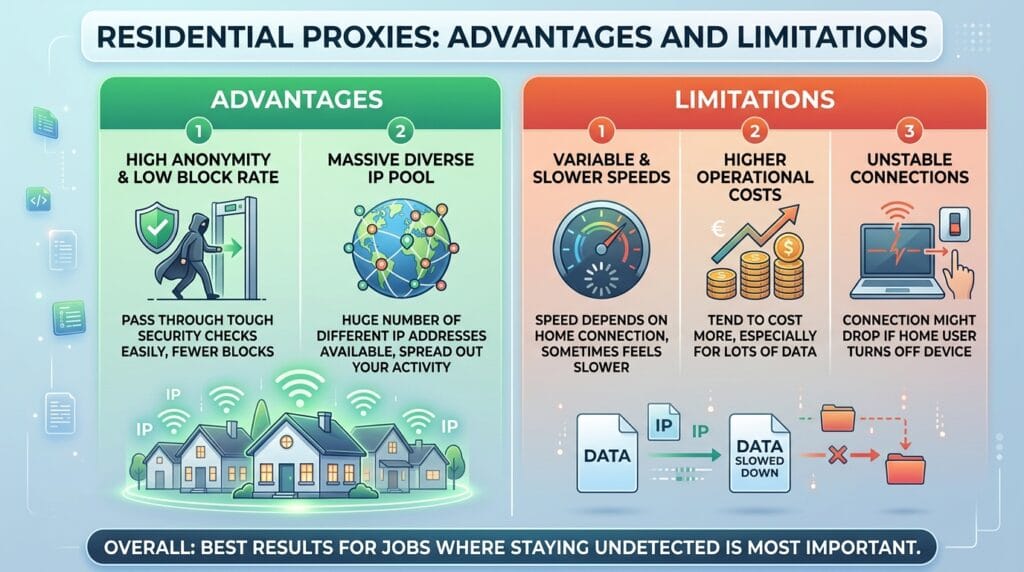
One big strength is how well they hide you. Because they come from real homes, they pass through tough security checks more easily and get fewer blocks. They work great when you need to look completely natural. Another plus is the huge number of different IP addresses available, which means you can spread out your activity. On the other hand, the speed can change depending on the home connection you use at that moment. Sometimes it feels slower than other options. They also tend to cost more, especially if you need lots of data. In busy times, the connection might drop if the home user turns off their device. Still, for jobs where staying undetected is the most important thing, these proxies often give the best results.
What Are ISP Proxies?
ISP proxies, sometimes called static residential proxies, get their IP addresses straight from internet service companies. The special part is that these addresses live on fast data center computers instead of home devices. This mix gives you the trusted feeling of a home IP along with strong and steady power from a server. They act like a bridge between two worlds, offering reliability that many people need in 2026.
How ISP Proxies Actually Work
With these proxies, the IP address is assigned by a real internet provider but runs on dedicated servers that stay on all the time. Your requests go through the ISP network, which makes websites see a trusted home-like address, yet everything moves quickly because of the strong backend. You usually get the same IP for long periods, which is perfect for tasks that need steady connections. Targeting options let you choose countries or cities, and the setup supports long sessions without sudden changes. This design keeps performance smooth and easy to manage.
Advantages and Limitations of ISP Proxies
These proxies shine with their fast and steady speeds. You get quick loading times and almost no sudden stops, which feels great for daily work. They cost less than pure residential ones for many users and handle large jobs without slowing down. The stable IP helps when you manage accounts over time. However, they do not rotate as freely as residential proxies, so you have fewer fresh addresses. Some advanced security systems can spot them a bit easier than real home traffic. Even with that, they offer a wonderful balance for many everyday needs in 2026.
Head-to-Head Comparison: ISP vs Residential Proxy
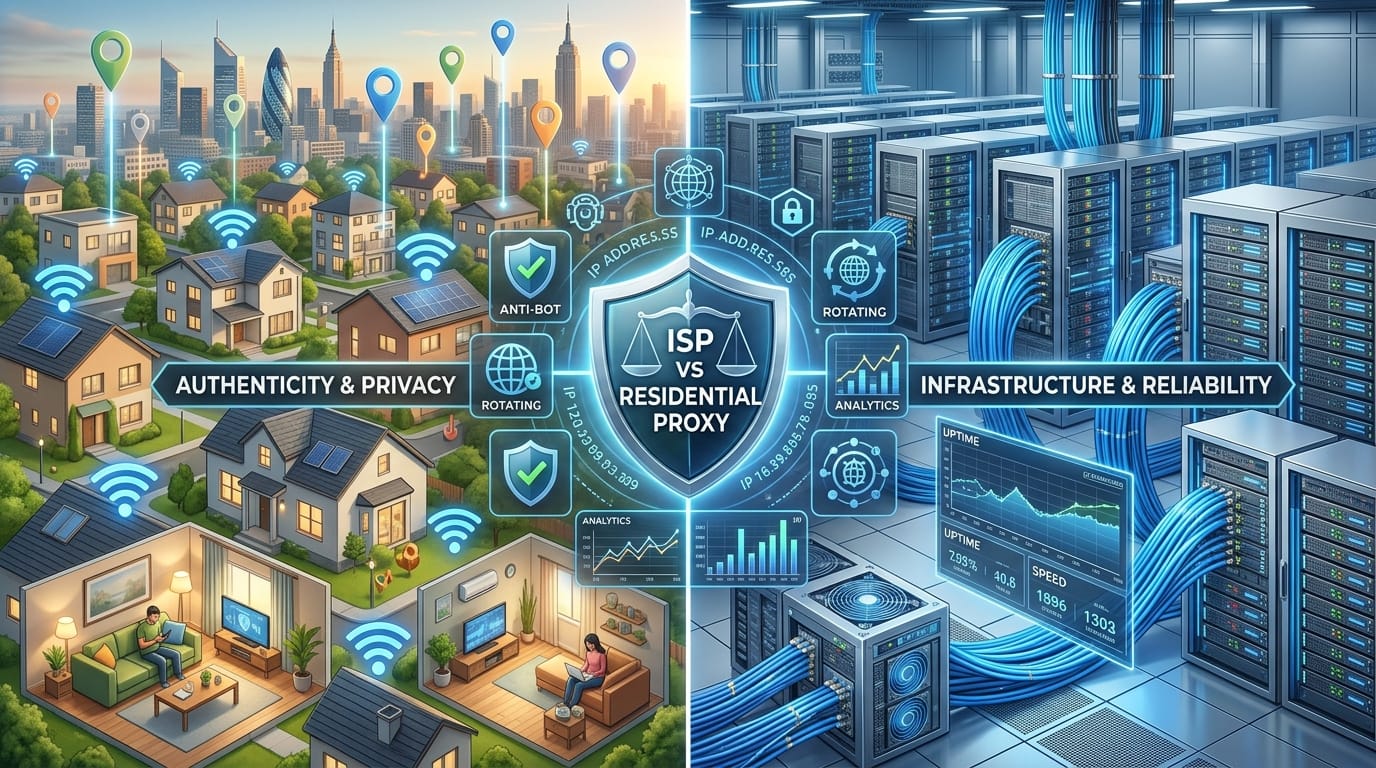
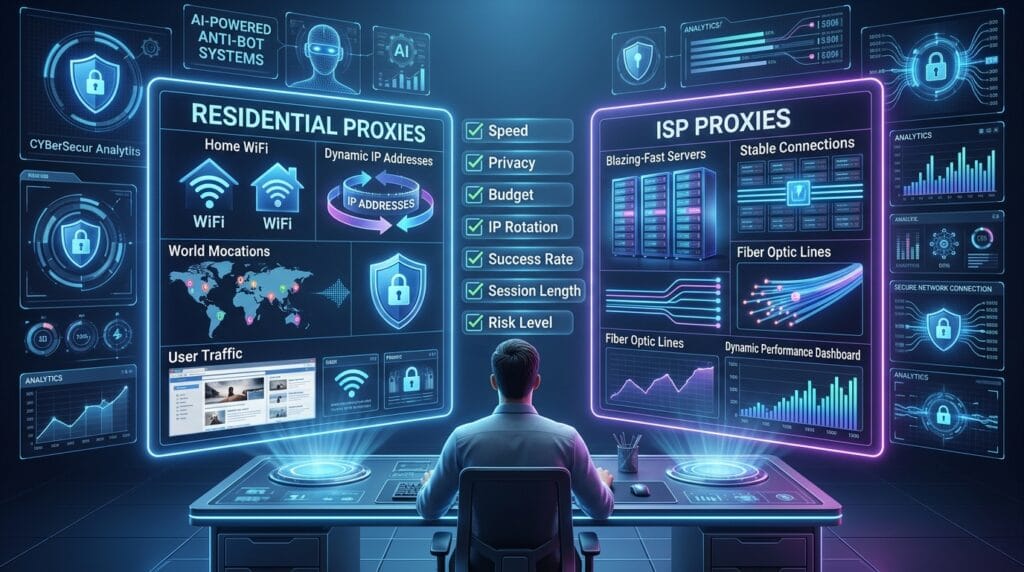
When you look at ISP vs residential proxy side by side, clear differences show up. Residential proxies win on hiding power and natural feel because they use actual home devices. ISP proxies beat them on speed and steadiness thanks to their server setup. For scaling up big tasks, residential ones give more variety in locations and IP addresses. Pricing often favors ISP proxies for steady use, while residential ones can add up faster with heavy data needs. Detection resistance stays higher with residential options against careful websites. Both types help you work safely, but the choice depends on whether you need trust or speed the most. This simple framework helps you picture the ISP vs residential proxy trade-offs without getting lost in numbers.
Performance Against 2026 Anti-Bot Systems
Today’s security tools use smart computer brains to study how people move online, check small details about devices, and watch behavior patterns. Residential proxies still do very well here because they carry real home signals that match everyday users. They fool many AI checks and keep success rates high. ISP proxies also perform strongly on most sites since their IPs come from trusted providers, but they sometimes need extra care on the strictest platforms. Factors like the provider’s reputation and how you set up your sessions play a big role too. In 2026, mixing smart usage with the right proxy type helps you stay ahead of these clever defenses.
Hybrid Strategies: Combining ISP and Residential Proxies
Many smart workers use both types together for the best outcome. You might run everyday big tasks on fast ISP proxies to save money and time. Then switch to residential proxies when you hit a really tough target that needs extra hiding. This blend lowers total costs and raises success. For instance, start a session with an ISP address for quick checks, then move to residential if extra steps appear. Good planning makes this easy and gives stronger results than using just one kind alone. Over time, you learn which mix fits your work perfectly.
Real-World Use Cases and Industry Applications
Different jobs call for different choices. In e-commerce price watching, residential proxies help gather fresh data without quick blocks. For sneaker buying bots, ISP proxies often give the steady speed needed to grab items fast. Social media managers like ISP options for keeping accounts logged in all day. Ad checkers turn to residential proxies to see real views from home locations. Market researchers mix both to study trends across many places. In 2026, understanding these matches helps teams work smoother and avoid wasted effort.
Cost Analysis and Long-Term ROI Considerations
Prices change based on how much data you use and what features you pick. Residential proxies usually charge by the amount of traffic, while ISP ones might offer flat rates for dedicated addresses. Think beyond the monthly bill. Count extra time from retries or lost work when bans happen. A simple way to compare is to add up successful actions divided by total cost. Over months, the steadier option can save money even if it starts higher. Ask yourself how often you need new IPs and how important speed is to your goals. This thinking helps you pick what truly gives good value for your situation.
ISP vs Residential Proxy: See the Comparison on Proxys.io
If you want to see the comparison clearly, proxys.io is a great place to visit. This service lets you check both ISP and residential proxy options side by side. You can explore their big IP pools, current prices, speed tests, and real success numbers all in one spot. Many people go to proxys.io to see the comparison and quickly find which type fits their work best. It makes the ISP vs residential proxy decision much easier because everything is shown in a simple way.
Common Myths and Misconceptions
Some people think one type is always better than the other, but that is not true. Both have their place depending on the job. Another idea is that using proxies is always against the rules, yet most honest business uses stay fine as long as you follow site terms. Many also believe faster always means worse hiding, but modern ISP proxies prove that balance is possible. Clearing up these wrong ideas stops expensive mistakes and helps you use tools wisely.
Future Trends in Proxy Technology for 2026 and Beyond
New ideas are coming fast. Smarter computer helpers will pick the best proxy for each task automatically. Rules about privacy may change how networks work, so ethical choices will matter more. Blends of different connection types could appear for even better hiding and speed. Keeping your methods flexible will help you stay ready for whatever comes next. Small improvements today build strong habits for tomorrow.
How to Choose the Right Proxy for Your Needs
Start by listing what you do most. Do you need lots of speed or the best possible hiding? Check your budget and how much data you expect to use. Try small tests with both types to see real results. Ask questions like: How often do I change locations? Can I handle some speed changes? A simple checklist includes success rate needs, session length, and risk level. Take time with this step, and you will feel confident in your pick.
FAQ
What makes residential proxies different from regular home internet?
They let many people share real home connections safely while keeping each user’s activity separate and private.
Can ISP proxies work for very sensitive tasks?
Yes, they often do well, but testing first helps make sure they fit your exact security needs.
How do I know if my work needs rotation?
If you do many quick requests or want to look like different people, rotation helps a lot.
Are these proxies safe to use every day?
When you pick trusted services and follow good habits, they add strong protection to your online work.
What happens if a proxy gets blocked?
Good providers give you quick ways to switch to new addresses so your work keeps going smoothly.
Do I need special software to use them?
Most work with simple settings in your browser or tools you already have, making them easy to start.
How has 2026 changed the proxy world?
Smarter security means you need better matching of tools to tasks than in past years.
Which type saves more money over a full year?
It depends on your tasks, but mixing both often gives the nicest balance of cost and results. You can see the comparison on proxys.io to understand the real differences.
Conclusion
Learning about ISP vs residential proxy helps you work smarter and safer in 2026. Each type brings its own gifts—residential ones for natural trust and ISP ones for steady power. Think about your own goals, try small tests, and build a setup that feels right for you. The right choice turns hard jobs into smooth ones and saves time and worry. Head over to proxys.io to see the comparison and begin exploring what fits best. You have everything you need now to make great decisions and enjoy your online work. Keep learning, stay curious, and watch your results grow better every day!
Disclaimer:
This article shares general information for learning purposes only. Always check the rules of the websites you visit and follow all local laws when using any online tools. Results can change based on many factors, so test carefully for your own situation.
Explore More
- Custom Drawer Boxes: Structural Design, Functionality, and Luxury Packaging Applications
- Perfume Packaging Boxes: Material Innovation and Branding in Fragrance Packaging
- Liopad Attack Caught on Camera: You Won’t Believe What Happened Next!
About the Author