Choosing the right cables for your electrical work feels like picking the best tools for a big job. It can make everything safer, easier, and more reliable. Today we will talk about single-core cables and multi-core cables. We will look at what they are, how they differ, and which one might be best for your needs. This matters a lot for homes, shops, and factories because the right choice helps keep everyone safe, saves money over time, and follows important rules. In 2026, with more smart homes and electric cars, knowing these cables helps you build systems that work well for years.
What Are Single-Core Cables?
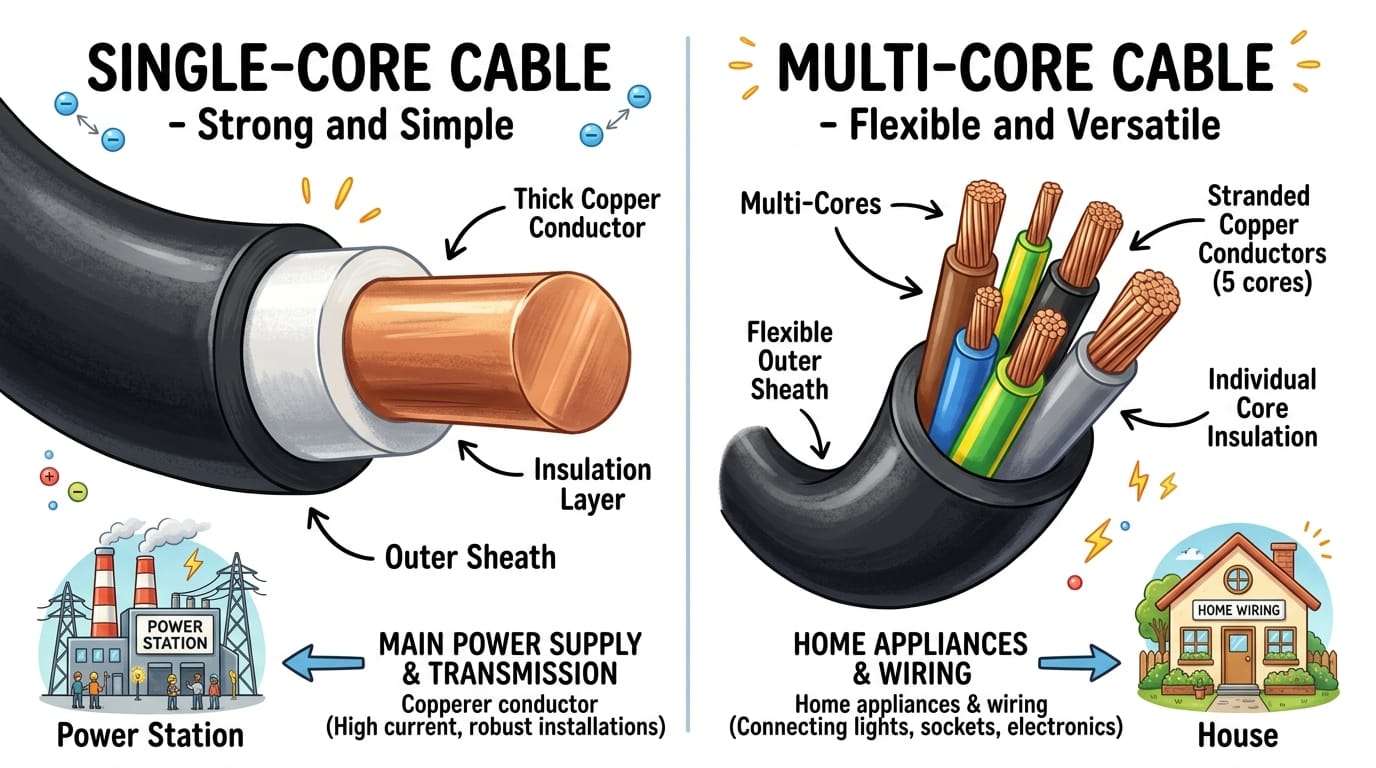
Single-core cables have just one main metal wire inside. This wire, often made of copper, carries electricity. It has a layer of insulation around it and sometimes an outer protective cover. These cables come in different sizes and can handle high voltage. People often use them where the cable stays in one place and needs to carry a lot of power without getting too hot.
For example, you might see them in big power lines or in fixed setups inside buildings. Because they have only one conductor, they can manage strong currents well. Their simple build makes them strong and good at sending power over long distances. They also lose heat easily into the air around them. This means they stay cooler even when working hard. In places that do not move much, like inside walls or underground pipes, single-core cables feel right at home.
What Are Multi-Core Cables?
Multi-core cables bring together several insulated wires inside one outer sheath. You can find versions with two, three, four, or even five cores. This design lets them carry power and signals at the same time in the same cable. Multi-core cables are very useful when you need to connect many things without running lots of separate wires.
Their flexible nature comes from the way the inner wires work together. This makes multi-core cables a favorite for jobs that need gentle bending or movement. In simple terms, they pack many helpers into one neat package. That is why multi-core cables shine in places where space is tight or where things need to connect in clever ways.
Key Technical Differences
When you compare these two types side by side, clear differences show up. Single-core cables usually have higher current-carrying ability for the same size because heat escapes more freely. Multi-core cables feel more flexible and take up less room overall when you need several circuits.
Heat spread works better with single-core because each cable stands alone. With multi-core cables, the inner wires sit close together, so they share some warmth. On the other hand, multi-core cables create less mess during installation since one pull can handle many connections. They also manage electromagnetic interference in different ways. Single-core cables often have less trouble with outside signals when placed properly, while multi-core designs can include shielding to protect the signals inside. These differences help you see why one might fit your job better than the other.
Advantages and Disadvantages of Single-Core Cables
Single-core cables bring real strengths to certain jobs. They carry more current for their size and let heat escape nicely. This makes them tough and long-lasting in steady places. You can join or fix them more easily too. Many electricians like how simple they are for big power tasks.
Yet they have some limits. They do not bend as easily, so you need more space to turn corners. Running many separate cables takes extra time and room. In busy or moving areas, this can feel tricky. Still, for strong, fixed power delivery, they often prove to be a solid friend.
Advantages and Disadvantages of Multi-Core Cables
Multi-core cables offer wonderful flexibility. You can pull them through tight spots and around bends without much struggle. Installing several circuits becomes quicker because one cable does the work of many. This saves space and makes the whole job look neat and clean.
They work well for control systems, data lines, and places where things move a little. You can even use them for lights, motors, and sensors all at once. On the other side, each inner wire might carry slightly less power than a single-core of the same size. Close wires can sometimes affect each other if not designed carefully. Mechanical stress over time needs watching too. But for many everyday needs, their convenience wins hearts.
Compliance with BS 7671 Standard
Following safety rules keeps everyone protected. The BS 7671 standard, also known as the IET Wiring Regulations, guides electrical work in the UK and similar places. Both single-core and multi-core cables can meet these rules when chosen and installed correctly.
The standard talks about how to arrange conductors, support cables properly, and choose materials that resist fire. It also covers earthing and ways to reduce risks. For multi-core cables, you must keep all parts of one circuit inside the same cable in many cases. This helps prevent problems. Knowing these rules helps your work stay legal and safe for years to come. Always check the latest version for your project.
Applications: When to Choose Multi-Core Cables
Multi-core cables feel perfect for homes and busy buildings. In houses, they connect lights, outlets, and appliances with fewer runs. Factories and machines love them because they handle control signals and power together. Automation systems, robots, and even sound or video setups use them happily.
In tight spaces like control panels or moving equipment, their flexibility makes life easier. Imagine wiring a new kitchen or updating an office – one neat multi-core cable can do so much. They bring comfort and speed to jobs where many connections matter.
Applications: When to Choose Single-Core Cables
Single-core cables stand strong in big power jobs. High-voltage lines, substations, and long power runs trust them every day. They handle heavy current without trouble and keep interference low. Fixed installations in large buildings or outdoor power systems often pick them for their durability.
When you need rock-solid performance over distance or under high load, single-core cables deliver. They shine in places where the setup stays put and strength counts most.
Cost Analysis: Initial vs Lifecycle Considerations
Money matters when picking cables. Single-core cables might cost less for the material itself in some sizes. Yet running many of them can raise labor costs during installation. Multi-core cables often cost more upfront but save time and effort when pulling wires.
Over many years, the total picture includes maintenance and energy use. Good choices reduce repairs and keep power losses low. For small home jobs, multi-core cables might win on ease. Big industrial projects sometimes favor single-core for their efficiency. Thinking about the whole life of the system helps you pick wisely and avoid surprises later.
Installation Best Practices and Common Pitfalls
Good installation makes cables last longer. Always respect the bending radius – too tight a turn can damage them. Support cables properly according to the rules so they do not sag or pull. For multi-core cables, watch for extra stress on the whole bundle. Single-core cables need careful parallel runs to avoid imbalance.
Common mistakes include ignoring heat buildup or mixing wrong types. Take time to plan the route and use the right tools. A little care at the start prevents big headaches down the road. Hybrid setups that mix both types can work well when each does what it does best.
Safety, Fire Performance, and Environmental Factors
Safety comes first in every electrical job. Modern cables use good insulation that resists fire and gives off less smoke. Low-smoke zero-halogen options help protect people and the air during any trouble. Both cable types can meet high safety marks when chosen right.
Mechanical protection, proper earthing, and attention to interference keep risks low. Today we also think about the planet. Many cables now use materials that recycle more easily. Picking options that balance performance and care for nature feels good for everyone involved.
Emerging Trends and Future-Proofing Choices
The world of electricity keeps changing. Smart grids, electric vehicle charging, and renewable energy systems need reliable connections. Multi-core cables help with complex control in these new setups. Single-core cables support the heavy power flows from solar farms or big batteries.
Choosing with the future in mind means thinking about growth. Will your system need more connections later? Flexible multi-core cables often adapt better to changes. Staying informed helps your work remain useful for a long time.
Decision Framework: Which Is Best for Your Needs?
Picking the right cable does not have to feel hard. Ask yourself a few friendly questions. What voltage and current do you need? How much space do you have? Will the cables move or stay fixed? What does your budget allow now and later?
For homes and control work, multi-core cables often bring joy with their ease. Big power transmission usually calls for single-core strength. Check the BS 7671 rules and talk with a qualified person. A simple checklist of your project needs will point you in the right direction.
Conclusion
We have walked through the world of single-core and multi-core cables together. Each type brings its own gifts of strength, flexibility, safety, and convenience. The best choice always depends on your specific situation, from the size of the job to the needs of the future.
Take time to think about your project, follow good practices, and work with skilled professionals. This way your electrical systems will bring light, power, and peace of mind for many years. You have what you need to make smart choices now. Go ahead and look at your current or next project with fresh eyes. You can build something wonderful and safe.
Disclaimer:
This article shares general information for educational purposes only. It is not professional electrical advice. Always consult qualified electricians and follow local regulations like BS 7671 for your specific installation to ensure safety and compliance.
Explore More
- Why Lone Worker Safety with UWB RTLS Matters
- Online Quran Classes: Learn the Holy Quran from Home
- What role does the chipset play inside a desktop GPU?
About the Author