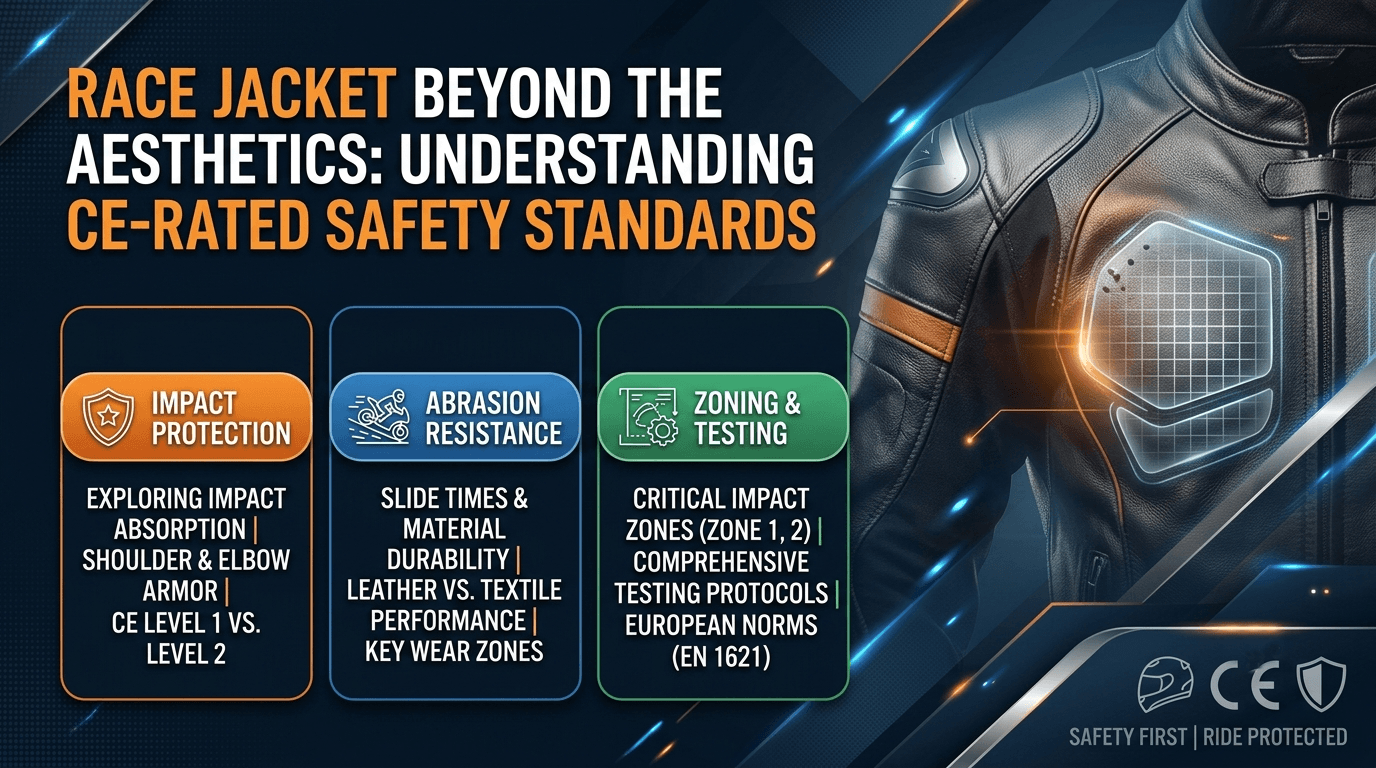
Introduction to Race Jacket Safety
For many enthusiasts of motorcycles, the race jacket is more than just a piece of motorcycle gear. It’s a symbol of character, style, and a love of the roads. The majority of racers spend a lot of time looking at different colors, designs, and branding, as well as racing-inspired styles, prior to making the purchase. While fashion definitely contributes to the attraction of a race-inspired jacket, not focusing on the appearance of a garment could be costly when safety is the primary concern. The real worth of a motorcycle race jacket is not the way it looks when sitting in a cafe, however, but how effectively it shields the rider from an accident.
Motorcycle riding is inherently a greater risk of injury than driving in a vehicle. Motorcyclists do not have the protective shell, airbags, and safety mechanisms for structural integrity that are found in cars. This is why protective gear is the first line of protection against collisions or abrasions, as well as environmental dangers. A good race jacket is specially designed to absorb the energy of an injury, decrease its severity, and provide crucial protection to areas that are vulnerable, like the shoulder, elbows, back, and chest.
This is the point at which safety standards that have been certified by CE are vital. CE certification gives riders an accurate benchmark to evaluate the protection qualities of the jacket. Instead of relying solely on marketing statements or images, users can utilize CE ratings to know how a garment performs under standard testing conditions. Knowing these standards allows users to make informed choices and prioritize safety, without sacrificing comfort or fashion.
Why Motorcycle Riders Need More Than Style
The Role of Protective Riding Gear
A race jacket serves a far more significant purpose than making a person look better. Each component that is included, from the outer shell to the inside armor, is designed to safeguard the body from accidents and sliding. If a rider loses control at high speed, their body could be subjected to enormous force upon impact. If not adequately protected, even a small accident could cause severe injuries.
Protective gear for riding acts as an individual safety system. The outer material is resistant to the abrasion caused by rough roads, and the integrated armor helps to absorb and disperse the impact energy. CE-certified protectors are specially designed to minimize the force transferred to the body of the rider, aiding in minimizing bruises, fractures, or soft tissue trauma. This is especially crucial when racing or in high-speed riding conditions, where the forces can be significant.
Some experienced riders compare riding gear to a seatbelt. In most cases, it is a wish to never have to use it. But when an accident happens, the value of it is immediately obvious. The purchase of a well-certified race jacket is an investment in your security and safety every time the throttle gets bent.
Risks of Choosing Fashion Over Protection
The market for motorcycles has a myriad of jackets that look aggressive, sporty, stylish, and race-inspired. However, not every jacket is advertised as a “race jacket. “A race jacket provides genuine safety features. Some brands focus on style while leaving out critical safety features.
A garment made of low-quality materials can look stunning, but it will fail catastrophically in the course of a slide. It is possible that decorative padding resembles armor, but it does not provide any real impact protection. In these instances, the users may be able to create an illusion of security based on appearance and not on any other factor.
A decision to choose style over safety can greatly increase the chance of injury. Fractures, road rash, back injuries, and spinal trauma are typical results of riding gear that is not properly fitted. CE certification removes doubt by proving objectively that the components are safe and have passed accepted tests. The riders who are aware of these standards are better able to differentiate between fashionable products and genuine protection equipment.
What Are CE-Rated Safety Standards?
Understanding the CE Mark
The CE mark is a reference to Conformité Européenne, which means European Conformity. It means that a product is compliant with the essential safety, health, and environmental standards imposed through European Union regulations. In the case of motorcycle clothing, CE certification demonstrates that certain protective elements have been tested against a set of recognized standards.
It is important to note that the CE symbol is not an official prize for marketing or a quality badge. It is instead an assurance that the product is compliant with the applicable safety standards. This is crucial as it indicates that this certification relies upon measurable performance standards, not on subjective views about the design or quality.
In the case of motorcycle clothing, CE is mainly focused on abrasion protection, impact resistance, the strength of seams, and the overall performance of the garment. The riders can utilize the standards to provide a reliable source when comparing various items from different brands and at different price points.
How CE Standards Apply to Motorcycle Jackets
The latest motorcycle clothing is analyzed in accordance with specific European standards to measure the safety of riders. The standards assess how well an item can withstand the impact of stressors and environmental pressures. Testing can include tear strength, abrasion resistance, and impact absorption, as well as the durability of the structure.
Protective armor that is inserted into elbows, shoulders, and back segments must be able to meet the impact-testing requirements. During these tests, armors are tested for controlled impact and measurement of the force that passes through the protection. A lower force transmitted indicates greater protection.
With the introduction of uniform testing procedures, CE standards allow riders to evaluate the products in a fair way. Instead of relying on advertisements phrases like “premium protection” or “race-ready design,” consumers are able to assess jackets on the basis of confirmed performance criteria.
The Evolution of Motorcycle Race Jackets
From Basic Leather Gear to Advanced Protection
Jackets for racing on motorcycles have changed drastically over time. The early racers used thick leather jackets specifically designed to guard against the elements and weather. Although leather provided a certain amount of resistance to abrasions, these jackets were not equipped with the modern protection for impact that is available today.
As technology for motorcycles advanced and the speed of racing increased, manufacturers realized the need for enhanced safety for riders. Studies into the dynamics of accidents resulted in significant improvements in the armor system, materials, and techniques for garment construction. Inserts for protection were developed to protect critical body parts, and the testing procedures became more scientific.
The latest race jackets blend years of experience in engineering with thorough crash analysis. This results in equipment that looks professional, but also provides tangible security benefits. Modern riders have protection levels that older generations could not even imagine.
Modern Materials and Engineering
Modern race jackets incorporate modern materials that combine toughness, flexibility, and ease of use. High-performance leather continues to be popular because of its superior durability; however, contemporary textiles are also extremely efficient alternatives.
Materials like Cordura Kevlar-reinforced fabric and high-density synthetic mixes provide amazing protection while cutting weight and increasing ventilation. Certain jackets have stretch panels to increase mobility but do not compromise security.
Innovations in engineering extend beyond the realm of the use of materials. Strategically placed armor, as well as ergonomic adjustment, airflow systems, and airbag integration, are an integrated approach to rider security. These innovations show how comfort and safety can be combined in one piece of clothing.
CE Certification Levels Explained
CE Level 1 Protection
CE Level 1 armor represents the base degree of protection from impact by European standards. In the course of testing, armor protectors must restrict the force that is transmitted through the armor to the cyclist’s body.
Level 1 protection gives the greatest safety advantages over padding that is not certified. A majority of entry-level and mid-range jackets feature Level 1 elbow and shoulder protectors, as they provide an ideal balance of security, comfort, and cost.
For normal riding, Level 1 armor could help reduce the risk of injury. However, riders who are exposed to faster speeds or tracks may need additional protection provided by higher levels of certification.
CE Level 2 Protection
CE Level 2 armor undergoes more demanding performance requirements. It has to transfer significantly less force in impact tests when compared with Level 1 protectors. This is why Level 2 armor usually provides better protection against severe impacts.
Professional cyclists, track-day lovers, and the more cautious commuters prefer Level 2 protection because it has a superior ability to absorb energy. The advancements in materials have enhanced comfort, making the latest level 2 protections more lightweight and flexible than older models.
Although the Level 2 gear can be more expensive, many users see the extra security as an investment worth it for long-term security.
Key Differences Between Level 1 and Level 2
FeatureCE Level 1CE Level 2
Impact Protection Good Superior
Force Transmission Higher Lower
Rider Protection Standard Enhanced
Typical Cost Lower Higher
Track Suitability Acceptable Preferred
The choice between them typically depends on your riding style and budget, as well as individual risk tolerance. Both levels offer a significant level of security compared to alternatives that are not certified.
Understanding Impact Protectors in Race Jackets
Shoulder Protection
They are one of the most susceptible areas in motorcycle accidents. The majority of riders land on their shoulders after being thrown by a vehicle, which makes an effective defense essential. This CE-certified shoulder protector is designed to absorb energy thrown at it and lessen the severity of injury.
Modern shoulder protectors make use of modern foam materials and designs that harden briefly when struck, while remaining flexible during normal motion. This allows the wearer to remain comfortable without compromising security.
Elbow and Forearm Protection
Elbows are often impacted by the ground first in a slide. Studies of repeated accidents involving motorcycles have shown that injuries to the elbow occur frequently in track and road accidents. Armour that is CE-certified distributes the force of impact across a greater area, while minimizing localized trauma.
Forearm protection is another way to increase the safety of bones by protecting soft tissue from impact. Together, these components make up a robust defense system for injuries to the upper limbs.
Back Protectors and Spine Safety
The spine is among the body’s most crucial and vulnerable structures. A serious spinal injury can lead to catastrophic consequences for life, which makes the protection of your back a top priority for racers. Many race jackets have CE-certified back protectors or pockets that are designed to support the back protectors.
Back protectors of high-quality absorb force from impacts and distribute force away from the spinal column. Certain advanced systems provide safety to the lower back as well as the tailbone regions. For those who want to be safe, think about upgrading to CE Level 2 back protection whenever they can.
Abrasion Resistance and Why It Matters
Leather vs Textile Race Jackets
Abrasion resistance is a key aspect of safety for motorcycles. When sliding, the rider could traverse long distances over rough terrain. The fabric’s capacity to endure friction directly impacts the severity of injury.
Leather has long been considered the most durable material for its resistance to abrasion. The best race leathers offer exceptional durability and are popular with professional racers. However, newer textile jackets have widened the gap between performance and durability significantly.
Advanced fabrics often provide superior weather resistance, less weight, and better ventilation. The ideal choice is based on the conditions of riding, your personal preferences, and the purpose for which it is intended—no matter the type of fabric, CE-tested clothing offers better assurance of performance.
Testing Methods for Abrasion Resistance
Abrasion testing mimics the friction encountered in real-world collisions. The samples are put in contact with surfaces that are abrasive, and scientists measure the length the materials can withstand wear and tear.
These tests will determine if an item can keep its barrier of protection during the course of a slide. The most durable materials typically provide better protection as well as greater durability under extreme conditions.
Testing that is consistent lets consumers compare products based on objective results rather than on advertising assertions.
Additional Safety Features in Modern Race Jackets
Airbag Compatibility
One of the most important innovations in motorcycle safety clothing is the inclusion of wearable airbag technology. Modern race jackets incorporate electronic airbag systems that can activate within milliseconds of collision detection.
These systems provide a cushion that surrounds the shoulders, chest, neck, and back. Research has shown significant reductions in force when airbags are properly installed. As technology advances and airbag compatibility increases, it is being sought after by the most experienced riders.
Reflective Elements and Visibility
Preventing accidents is as important as injury prevention. The features that increase visibility help riders stay visible in dark and harsh weather conditions. Reflective panels, pipes, and strategically positioned accents increase visibility from a variety of angles.
While the importance of visibility is often ignored, it is crucial to the safety of riders. Jackets that are highly protective will not be beneficial if a collision is caused by another road user who did not observe the driver.
How to Choose a CE-Rated Race Jacket
The selection of the appropriate race jacket requires the right balance between comfort, safety fit, and the intended usage. The first step is to verify CE certification, and then determine the degree of protection provided. Particular areas like elbows, shoulders, and back need special attention.
It is also important to be fit. A jacket that is loose can cause armor to move during an accident, decreasing efficiency. A garment that is too tight could limit movement and create discomfort. An appropriate fit makes sure that elements of protection are correctly placed in the event of a need.
Other factors to consider include weather resistance, ventilation materials, airbag compatibility, and the type of riding. The track riders might be more concerned with maximum protection, whereas commuters could look for the right balance between security and practicality.
Common Misconceptions About Race Jacket Safety
Many riders think that expensive jackets will automatically offer superior protection. Even though premium brands often have sophisticated features, the price alone isn’t a guarantee of security. CE certification remains a trustworthy indicator of the quality of protection.
Another myth is that all armors offer the same level of security. The reality is that certification levels differ greatly. The wearer should confirm that the armor is in compliance with CE Level 1 or Level 2 requirements instead of assuming that all armors work the same way.
Many people believe that short trips don’t require safety equipment. However, accidents do happen within a few minutes of home trips. Regular use of CE-certified clothes will protect you regardless of the travel duration.
Benefits of Investing in CE-Certified Riding Gear
The most important advantage of riding gear that is CE-certified is improved security. Riders can rest assured that their gear has been evaluated with respect to recognized methods of testing. This confidence extends beyond the marketing jargon and shows tangible quality standards.
Equipment that is CE-certified can also help reduce the severity of injuries, in addition to improving comfort and longer-lasting endurance. Companies that invest in CE certification typically maintain higher quality control standards throughout the production process.
From a financial point of view, investing in high-quality protective equipment can be considerably cheaper than tackling medical costs resulting from injuries that could have been prevented. Safety gear should be seen not as an expense but as a worthwhile investment in the health of your own.
The Future of Motorcycle Safety Apparel
The safety gear for motorcycles continues to change quickly. The emergence of new materials, smart fabrics with integrated sensors, and adaptive armor technology promises more security in the near future. Wearable electronics that monitor the movement of the rider and predict crashes are already impacting the design of products.
Machine learning and artificial intelligence can further enhance the airbag deployment system and techniques for detecting accidents. Additionally, the sustainability movement is informing manufacturers to research eco-friendly materials without compromising the safety of their products.
The next race jacket is likely to combine sophisticated impact protection, smart technology, superior comfort, and a greater commitment to the environment. As these developments become more advanced, racers will benefit from ever-more advanced safety features that go well beyond the conventional protective equipment.
Conclusion
A race jacket should not be judged solely based on its appearance. While a flamboyant style, top branding, and race-inspired design might draw attention, the real value is in the protection offered by a race jacket in the most critical moments. Safety standards that are CE-certified provide users with a reliable basis for evaluating the performance of their protection through objective testing and compliance with regulations.
From abrasion-resistant and impact-resistant materials to the latest airbag compatibility features, modern race jackets reflect years of advancement in rider safety. Being aware of CE standards, test procedures, and other features that protect riders, to make informed decisions that focus on performance as well as security.
Every ride is a risk. However, selecting an approved CE-rated race jacket can greatly increase your likelihood of being prepared for any eventuality. Aside from aesthetics, focusing on safety standards that are certified is among the most intelligent choices any racer can make.
FAQs
1. What does CE certification refer to for a race suit?
CE certification signifies that the jacket, as well as its components of protection, have been tested and comply with the accepted European safety standards for motorcycle protective equipment.
2. Are CE Level 2 armor better than CE Level 1?
Yes. CE Level 2 armor absorbs more energy from impacts and transfers less force to the rider, providing more protection.
3. Do all motorcycle racing jackets have back protection?
No. Certain jackets come with back protectors, whereas others offer only a compartment to hold an insert. Always verify the specifications of the jacket.
4. Are the race jackets made of fabric just as safe as leather ones?
Modern, high-performance jackets made of textile can offer superior protection, particularly when CE certified, but premium leather is highly praised for its abrasion resistance.
5. How often should the motorcycle armor be changed?
Armor must be regularly inspected and replaced if damaged, excessively worn, or after a significant impact, as per the recommendations of the manufacturer.
About the Author