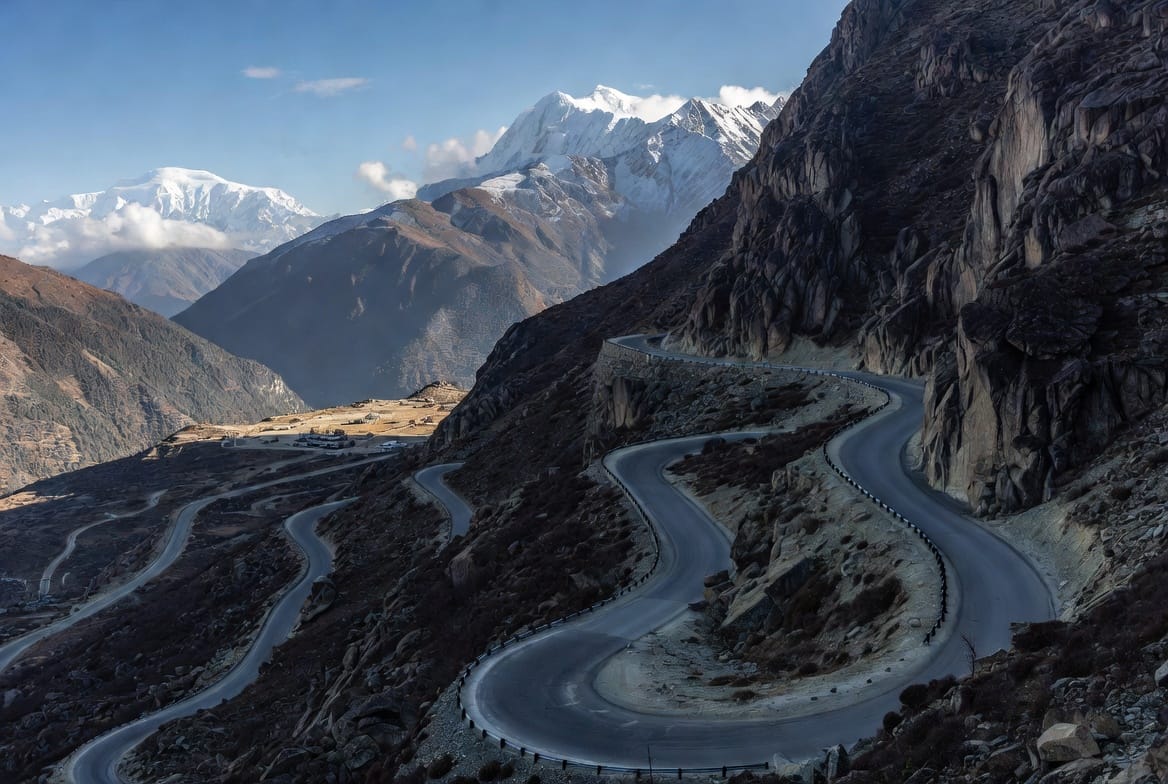
Search online for the “Old Silk Route in Sikkim,” and you will find hundreds of travel blogs filled with beautiful photos of snow-capped mountains and winding roads. What those blogs often leave out is the harsh reality of getting there.
Traveling to East Sikkim—specifically the high-altitude corridor through Rongli, Lingtam, Zuluk, and Nathang Valley—is not a casual weekend road trip. This area shares a sensitive border with Tibet, making it a heavily guarded military zone. You cannot simply rent a car, turn on your GPS, and drive there. It requires strict permits, specific vehicles, and careful altitude planning.
If you want a successful trip without getting turned away at an army checkpost, you need hard data. Here is the exact, step-by-step logistical breakdown of how to legally and safely navigate the East Sikkim Silk Route.
What is the Old Silk Route?
Before the borders closed in the 1960s, this treacherous mountain pass was used by traders traveling between Lhasa (Tibet) and the port of Kolkata. Traders carried silk, tea, and spices on mules across some of the most dangerous terrain on Earth.
Today, a small section of this route in East Sikkim is open to tourists. However, the terrain remains unforgiving. The roads are carved directly into the sides of cliffs, the weather changes in minutes, and the military presence is a constant reminder of the region’s strategic importance.
1. The Permit Reality: You Cannot Just “Show Up”
Unlike popular tourist hubs like Gangtok or Darjeeling, the upper sections of East Sikkim are classified as restricted areas. To enter, every single traveler needs a Protected Area Permit (PAP).
If you arrive at the military checkpoint without this document, the guards will turn you around immediately. There are no exceptions, no fines you can pay to bypass it, and no way to bribe your way in.
Where Does the Restricted Zone Begin?
The restricted military zone starts just after the town of Rongli. You can visit lower-altitude villages like Sillery Gaon or Aritar without special paperwork. However, the moment you plan to move higher toward Lingtam, Zuluk, or Nathang Valley, the permit becomes mandatory.
The Document Checklist
Permits are issued at the Rongli SDPO (Sub-Divisional Police Officer) office. To get your permit approved smoothly, you must hand over physical copies of these documents:
- Original ID Proof: You must carry your Voter ID Card or Passport. (Crucial Note: Aadhaar Cards and PAN Cards are strictly NOT accepted for Sikkim permits).
- Photocopies: Bring at least 4 clear photocopies of your approved ID.
- Photographs: Carry 4 recent passport-sized color photographs.
- Vehicle Papers: Your driver must provide their commercial driving license and local vehicle registration.
Logistics Warning: The Rongli permit office usually closes by 2:00 PM. If your train is delayed and you reach Rongli late in the afternoon, you will have to stay overnight in Rongli and apply for the permit the next morning.
2. Transport Logistics: Navigating the Mountain Roads
The gateway to Sikkim is usually the New Jalpaiguri Railway Station (NJP) or the Bagdogra Airport (IXB) in West Bengal. From the plains, your logistical climb begins.
NJP to Rongli: The First Leg
There are no direct public buses that run all the way up the Silk Route. You have two primary transport options:
- Reserved SUV (High Cost): This is the best option for families or groups looking for comfort. A private vehicle takes you directly, and the driver handles the entire permit application process for you at the Rongli checkpost.
- Shared Jeeps (Low Cost): A budget-friendly option, though it comes with a trade-off. It requires you to change vehicles midway through the journey, takes much longer to reach the destination, and the seating is often cramped.
Note: Small hatchback cars like a Maruti Swift or Alto cannot handle the steep, rocky inclines past Lingtam. You must use a heavy utility vehicle with high ground clearance.
The Local Vehicle Rule (Sikkim Registered Only)
Once you cross the Rongli checkpost and enter Lingtam, the road narrows and becomes much steeper. Lingtam is the first major village inside the permit zone. From here, the road climbs aggressively through 32 hairpin bends known as the Zuluk loops.
This is the most important transport rule: Only vehicles officially registered in Sikkim are legally allowed to drive tourists on this upper route.
If you hire a West Bengal-registered taxi from the NJP railway station, they can only drop you off at specific border towns. They cannot take you touring inside the restricted Silk Route areas. You must book a local Sikkim driver. To ensure a smooth transition, coordinate this vehicle handoffs in advance, or cross-reference your route with this breakdown of offbeat locations in Sikkim to coordinate your transit points effectively.
3. Altitude and Health Planning
Many travelers fail to research the extreme altitude changes on this route. You will be moving from near sea level to extreme heights in just a few hours. This rapid change in elevation can easily cause Acute Mountain Sickness (AMS), which causes headaches, nausea, and shortness of breath.
The Altitude Climb
- Siliguri / NJP (400 feet): This is your starting point on the plains. The weather here is usually hot and humid.
- Lingtam (5,000 feet): A safe basecamp for your journey. It is highly recommended to stay here on your first night to let your body adjust to the mountain air.
- Zuluk (9,400 feet): The elevation increases significantly here, and the air gets noticeably thinner. Expect it to be very cold at night, even during the summer months.
- Nathang Valley (13,500 feet): This is an extreme altitude zone. Staying overnight here is not recommended if you have breathing difficulties or pre-existing heart issues.
- Kupup Lake (14,000 feet): A high-altitude mountain pass characterized by a heavy military presence, freezing temperatures, and icy winds.
Financial and Medical Reality Check
- No ATMs: There are absolutely no ATMs past the town of Rongli. You must carry enough physical cash to pay for your homestays, meals, and driver tips for the entire duration of your trip. Digital payments rarely work due to poor network coverage.
- No Hospitals: Past Rongli, medical infrastructure is limited to basic army medical camps. If you require daily medication, bring extra supplies from home.
4. Accommodation: The Homestay Network
Do not expect luxury hotels, resorts, or swimming pools on the Silk Route. Due to the extreme environment and government regulations, the entire region operates entirely on a “Homestay” model. These are basic rooms built as extensions to local village houses.
What to Expect:
- Basic Comforts: You will get clean beds, heavy winter blankets, and basic attached bathrooms.
- Power Cuts: Electricity is highly unstable. While geysers (water heaters) are installed in some rooms, power cuts are frequent. You may have to rely on buckets of hot water provided by your host.
- Food Logistics: Because buying groceries means driving hours down the mountain, all meals are included in your room tariff. You will be served simple, fresh local food: rice, dal, local vegetables, and egg or chicken curry. There are no restaurants or multi-cuisine menus here.
A Sample Logistics-First Itinerary
To avoid altitude sickness and permit delays, structure your days like this:
- Day 1: Arrival & Basecamp. Travel from NJP to Rongli. Process your permits before 2:00 PM. Continue to Lingtam (5,000 ft) and spend the night acclimatizing.
- Day 2: The Climb. Drive up the 32 hairpin bends. Stop at the Thambi View Point for a clear view of Mt. Kanchenjunga. Spend the night in Zuluk (9,400 ft).
- Day 3: The High Pass. Drive to the extreme altitudes of Nathang Valley and Kupup Lake (14,000 ft). Descend safely back toward the lower plains or head toward Gangtok via the Tsomgo Lake route (if your permit allows).
Final Thoughts
Traveling the East Sikkim Silk Route is one of the most rewarding road trips in India, offering untouched landscapes and a deep sense of history. However, it is not a trip you can improvise.
Book a reliable local driver in advance, prepare your physical documents exactly as the police require, carry enough cash to survive a week offline, and respect the altitude by taking it slow. If you follow the data and respect the rules of the terrain, you will avoid the common pitfalls that ruin most tourist trips.
Written by the team at BriefVoy, a travel resource dedicated to logistics-first, anti-fluff guides for remote destinations.
Explore More
- The Future of Supply Chains: The Rise of Integrated Logistics Systems
- Logistics Mobile App: Features, Development Services, Custom Solutions & Cost Guide
About the Author