Marketing campaigns have always been shaped by what teams could produce within a limited time. Creative ideas often had to fit within production constraints. If something required complex visuals or fast iteration, it was either delayed or simplified.
That constraint is beginning to fade.
AI video is not just speeding up production. It is changing how campaigns are planned, executed, and scaled. Instead of building campaigns around production timelines, teams are now designing campaigns around creative flexibility.
At the center of this shift isSeedance 2.0, which allows marketers to generate campaign-ready video within the Higgsfield workspace without relying on traditional production cycles.
Campaigns Are Designed for Iteration, Not Perfection
Traditional campaigns often followed a fixed path. Teams would spend weeks refining a concept, produce a final version, and then distribute it. Once launched, making changes was difficult and expensive.
AI video changes this dynamic by making iteration part of the process. Campaigns are no longer built as single outputs. They evolve through multiple variations.
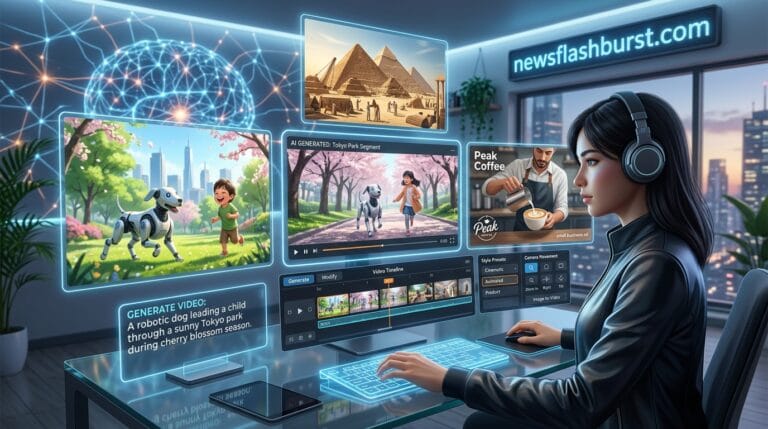
Seedance 2.0 supports this by allowing marketers to generate video from a combination of inputs, including text, images, video, and audio. Instead of committing to one version, teams can explore multiple directions quickly.
Higgsfield provides a workspace where these variations can be refined and adjusted without starting over. This allows campaigns to adapt based on performance and feedback.
This shift reflects a broader Marketing trend where flexibility becomes more valuable than perfection.
Speed Becomes a Competitive Advantage
Timing has always mattered in marketing, but it is becoming even more critical. Trends move quickly, and audiences expect content that feels current.
Traditional production workflows struggle to keep up with this pace. By the time a video is produced, the opportunity may have already passed.
Seedance 2.0 addresses this by reducing the time between idea and execution. Campaign content can be generated and refined within a much shorter cycle.
Higgsfield enables this by providing a workspace where marketers can move from concept to output without switching between tools. This creates a more responsive approach to campaign creation.
Speed is no longer just an advantage. It becomes a defining factor in how campaigns perform.
Personalization Moves Beyond Static Content
Personalization has been a key focus in marketing for years, but it has often been limited to text and images. Video personalization has been more difficult due to production constraints.
AI video changes that by making it easier to create multiple variations of the same content. Campaigns can be adapted for different audiences, regions, or platforms without requiring separate production processes.
Seedance 2.0 supports this by generating structured video sequences that can be adjusted based on input. Higgsfield allows marketers to refine these variations within a single workflow.
This makes it possible to create campaigns that feel more relevant to specific audiences. Personalization becomes part of the creative process rather than an afterthought.
Content Becomes More Consistent Across Channels
Modern campaigns rarely exist in one place. Content needs to work across social media, websites, and advertising channels. Maintaining consistency across these formats can be challenging.
Seedance 2.0 helps address this by producing multi-shot video with consistent characters and visual structure. Content can be adapted into different formats while maintaining a unified identity.
Higgsfield allows marketers to manage these variations in one workspace. Adjustments can be made without disrupting the overall style of the campaign.
For those exploring how multi-channel campaigns are evolving, this guide onmultichannel marketing strategy explains how consistency impacts performance across platforms.
This consistency strengthens brand recognition and improves overall campaign effectiveness.
Creative Direction Becomes the Core Skill
As production becomes more automated, the role of the marketer begins to shift. Technical execution becomes less important, while creative direction becomes more central.
Seedance 2.0 supports this by handling the execution of video generation. Marketers focus on defining the message, tone, and structure of the campaign.
Higgsfield provides the environment where these decisions can be applied and refined. Instead of managing production details, marketers can focus on shaping the narrative.
This creates a more strategic approach to content creation, where creativity drives results.
Campaigns Scale Without Increasing Complexity
Scaling a campaign has traditionally required more resources. More content meant more production time, more editing, and more coordination.
AI video changes this by allowing campaigns to scale without adding complexity. Multiple versions of content can be generated and refined within the same workflow.
Seedance 2.0 enables this by producing structured video output that can be extended and adapted. Higgsfield supports this by providing a workspace where these variations can be managed efficiently.
This allows marketers to increase output without increasing effort.
Data and Creativity Begin to Align
Marketing has always balanced creativity with data. Campaigns are guided by insights, but execution often requires creative interpretation.
AI video brings these two elements closer together. Faster production allows marketers to test ideas more frequently and refine them based on performance.
Seedance 2.0 makes this possible by reducing the time required to create new content. Higgsfield allows marketers to adjust campaigns quickly based on feedback.
This creates a loop where data informs creativity, and creativity evolves continuously.
A New Campaign Model Emerges
The traditional campaign model is based on planning, production, and distribution. Each phase is distinct and often time-consuming.
AI video introduces a more fluid model. Planning, creation, and refinement happen within the same process. Campaigns evolve in real time rather than following a fixed path.
Seedance 2.0 represents this shift by combining multimodal inputs, multi-shot storytelling, and synchronized audio into a single system. Higgsfield makes this approach practical by providing a workspace where campaigns can be shaped and refined continuously.
This changes how marketing campaigns are structured from the ground up.
Conclusion
Marketing campaigns are entering a new phase where speed, flexibility, and scalability define success. The ability to adapt quickly is becoming just as important as the initial idea.
Seedance 2.0 plays a key role in this transformation by enabling marketers to generate and refine video content within a unified process. Higgsfield provides the environment where this process becomes practical and efficient.
The result is a shift away from rigid production cycles toward dynamic, evolving campaigns.
As this approach continues to develop, marketing will become less about managing production and more about shaping ideas that can adapt, scale, and connect with audiences in real time.
About the Author