Picking the right commercial solar installer is one of the most important decisions you’ll make if you’re going ahead with solar for your business. Get it right, and you’ll have a system that performs well, saves you money for decades, and causes you zero headaches. Get it wrong, and you could be dealing with underperforming panels, voided warranties, unexpected costs, or – in the worst cases – problems with your roof or electrical systems.
The solar industry has grown quickly in the UK, and that’s mostly a good thing. But it does mean there are companies operating in this space with very different levels of experience, expertise, and professionalism. Knowing how to tell the difference matters.
This guide covers what to look for, what questions to ask, and the red flags that should make you think twice – based on the conversations we have with business owners every day.
- Start With MCS Certification
The single most important credential to check is whether the installer holds MCS certification. MCS stands for Microgeneration Certification Scheme, and it’s the industry-standard quality framework for renewable energy installations in the UK.
MCS certification applies to both the products being installed and the company doing the installation. An MCS-certified installer has been assessed against defined standards for competence, quality, and customer protection. They’re required to follow installation best practices, provide you with a warranty on their workmanship, and register your system on the MCS database.
There are a few practical reasons why this matters beyond quality assurance. If you want to access the Smart Export Guarantee, the scheme that pays you for surplus electricity you export to the grid, your system needs to be installed by an MCS-certified company. If you’re applying for any grant funding, MCS certification is typically a requirement.
You can verify any installer’s MCS status on the official MCS installer finder at mcscertified.com. Don’t just take their word for it – check.
- Commercial Experience Is Not the Same as Residential Experience
Here’s something that trips a lot of business owners up: many solar companies in the UK primarily install domestic systems. They’re experienced at putting 12 panels on a house roof, and they do that very well. But commercial solar is a different discipline entirely.
Commercial installations typically involve:
- Three-phase electrical systems (as opposed to single-phase in most homes)
- Larger roof structures with different load-bearing considerations
- More complex grid connection processes require DNO approval
- Higher-capacity inverters and more sophisticated monitoring systems
- Potentially higher electrical safety and compliance requirements
- More detailed structural assessments, particularly for flat roofs
A company that primarily works on houses and occasionally takes on a small commercial job is not the same as a company that does commercial solar day in, day out. When you’re talking to potential installers, ask specifically about their commercial portfolio. How many commercial systems have they installed? What sizes? What sectors have they worked in?
A genuinely experienced commercial solar installer should be able to give you real examples – and ideally, connect you with some of those clients so you can hear about their experience directly.
- Ask to See a Detailed System Design – Not Just a Quote
One of the clearest signals of a professional commercial solar installer is the quality of their initial assessment and proposal.
A good installer will want to understand your electricity consumption in detail before they design anything. They’ll ask for your bills, look at your half-hourly consumption data if available, and build a system design around how your business actually uses electricity. They should model your expected generation, your expected self-consumption, your likely export, and the resulting financial return.
What you don’t want is an installer who glances at your roof, fires off a quote based on how many panels fit, and tells you it’ll pay back in X years without showing you the underlying assumptions.
The design proposal you receive should include:
- A clear breakdown of the proposed system (panel brand and spec, inverter, mounting system)
- Projected annual generation figures based on your specific location and orientation
- An estimate of self-consumption versus export based on your usage profile
- A financial model showing year-by-year savings and overall return
- Details of warranties on equipment and workmanship
If a company can’t or won’t provide this level of detail before you sign anything, that’s a red flag.
- Equipment Quality: What to Look For
Not all solar panels are equal. The market includes everything from premium-tier products with 25-year performance guarantees to cheaper panels that may degrade faster and come with weaker warranty terms.
For commercial solar, where you’re making a significant long-term investment, the quality of the equipment matters. Here are the key things to understand:
Panel efficiency refers to how much sunlight the panel converts into electricity. Higher efficiency panels generate more power from the same roof space – useful if you have limited area to work with. Monocrystalline panels are typically the most efficient option for commercial applications.
Performance warranties – most reputable panel manufacturers offer a performance warranty guaranteeing that the panel will still produce a certain percentage of its original output after 25 years (typically 80-90%). Check what the warranty actually covers and whether the manufacturer has a track record of honoring it.
Product warranties cover manufacturing defects and typically last 10-15 years for quality panels. Some premium brands offer 25-year product warranties.
Inverter quality matters just as much as panel quality. Inverters convert the DC electricity produced by panels into AC electricity that your building can use. They’re the component most likely to need replacing during the system’s lifetime. Look for well-established brands with solid warranty terms and UK service support.
An experienced installer should be able to explain their equipment choices and why they’ve selected specific products for your installation. If they can’t, or if they’re evasive about the origin of the panels, press harder.
- The Grid Connection Process: Experience Saves Time
For commercial solar installations above a certain size – typically above 3.68kW single-phase or 11kW three-phase – you’ll need approval from your local Distribution Network Operator (DNO) to connect your system to the grid.
This process can take anywhere from a few weeks to several months, depending on your DNO and local network capacity. An experienced commercial solar installer will know how to manage this process efficiently, what information to submit, and how to handle any issues that arise.
Inexperienced installers sometimes underestimate the time DNO approval takes, or don’t initiate the application early enough. This can delay your installation significantly and cause real frustration.
When you’re talking to potential installers, ask them directly: how do they manage the DNO application process, and what timescales should you realistically expect? Their answer will tell you a lot about their experience.
- Aftercare and Monitoring: The Installation Is Just the Beginning
A solar system running at its best for 25 years doesn’t happen by accident. It requires a working monitoring system, prompt fault identification, and access to a team that can respond when something isn’t right.
Ask every installer you speak to about their aftercare provision. Specifically:
- What monitoring system is included, and can you access it yourself in real time?
- What happens if the system generates an alert or fault?
- What’s their response time if something needs attention?
- Do they offer ongoing maintenance contracts?
The monitoring question is particularly important. A quality commercial solar installation should come with a monitoring platform that lets you see exactly how much your system is generating at any time. If generation drops unexpectedly, you want to know about it immediately – not six months later when you notice your bills are higher than expected.
At Excel Energy, every system we install includes real-time monitoring and ongoing support. We want your system to perform at its best for its entire life, not just in the first few months after installation.
- Pricing: Knowing What You’re Comparing
When you get multiple quotes for commercial solar installation, comparing them isn’t always straightforward – because quotes can vary significantly in what they include.
Two quotes for the same roof space might look very different if one is using a budget panel and a basic inverter while the other is specifying premium equipment. Or one might include scaffolding and the other doesn’t. Or one might include the DNO application fee, and the other lists it as an extra.
Before you compare prices, make sure you’re comparing like for like. Ask each installer to break down their quote clearly so you can see exactly what’s included.
On price itself: the cheapest quote is very rarely the best value when it comes to commercial solar. A system that costs 20% less but underperforms by 15% over 25 years, or that fails in year 8 and can’t be repaired because the company has closed down, is not a good deal.
That said, you also don’t need to pay a premium just because a company has glossy marketing. Focus on the quality of the design proposal, the strength of the equipment warranties, and the company’s track record – not just the bottom line.
- Questions to Ask Before You Commit
Here’s a straightforward checklist of questions worth putting to any commercial solar installer you’re seriously considering:
- Are you MCS-certified? (And can I verify that on the MCS website?)
- How many commercial installations have you completed in the last 12 months?
- Can I speak to two or three of your recent commercial clients?
- What panel and inverter brands are you proposing, and why?
- What are the warranty terms on the panels and inverter?
- How will you manage the DNO application, and what timescales should I expect?
- What does your monitoring system look like, and do I have direct access?
- What aftercare do you offer once the system is commissioned?
- What does your installation warranty cover and for how long?
- What happens if there’s a problem three years after installation?
A good installer will answer all of these questions confidently and clearly. If any of these questions produce vague answers, deflection, or visible discomfort – that’s useful information.
- Why UK Businesses Choose Excel Energy
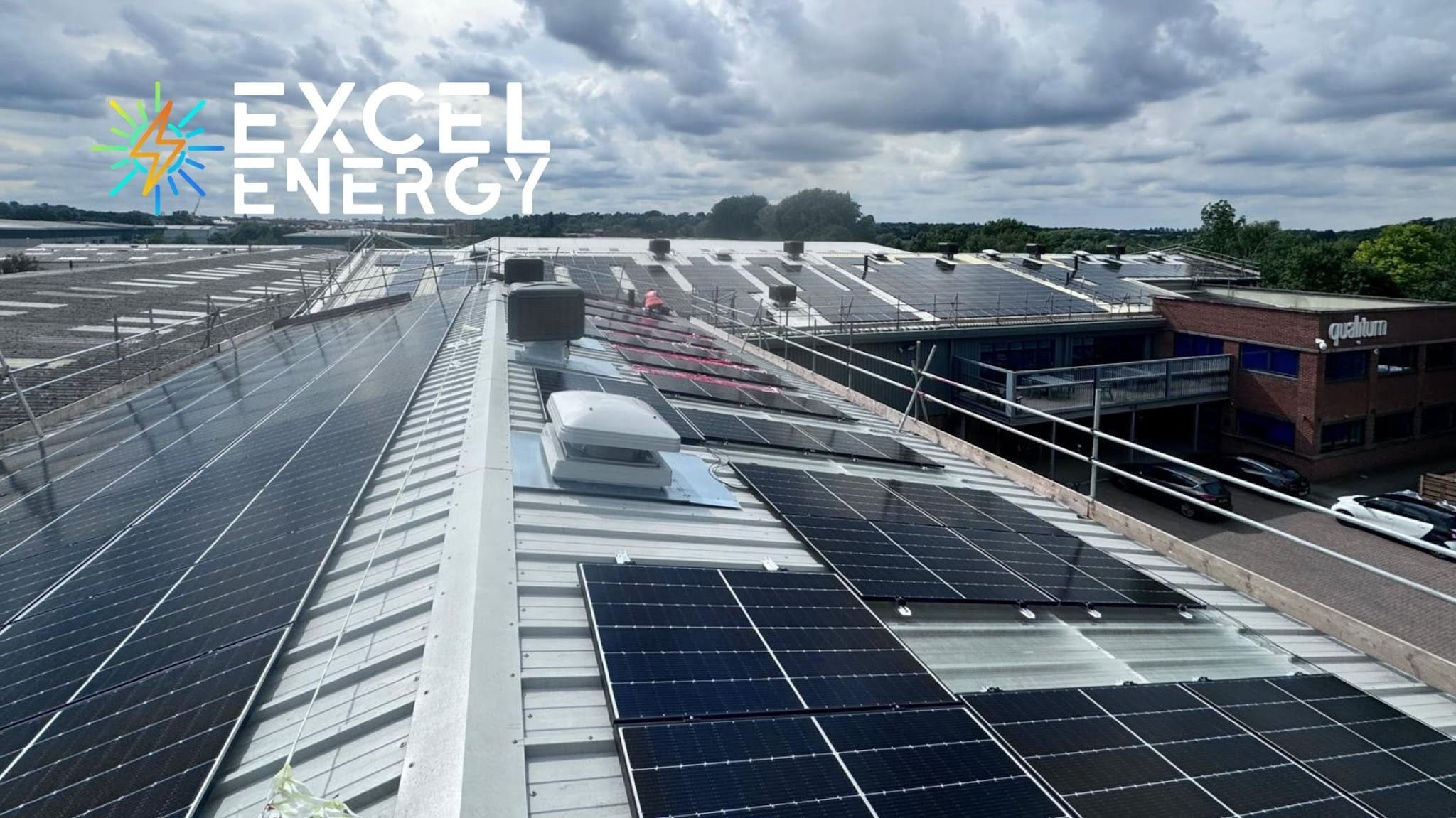
Excel Energy has been completing commercial solar installations across the UK for years. We’re MCS-certified, we only work with quality-assured equipment from reputable manufacturers, and every project starts with a thorough site survey and honest assessment.
We don’t use a one-size-fits-all approach. Every commercial solar system we design is built around the specific energy consumption patterns, roof configuration, and financial goals of the individual business. And when the installation is complete, we don’t disappear – our team is available to support you throughout the life of your system.
If you’re looking for a commercial solar installer you can trust, we’d welcome the conversation.
Excel Energy – UK Commercial Solar Installers | Excelenergy.co.uk Get in touch today for a free commercial solar survey and honest, detailed proposal.
READ ALSO: Install Solar Now: Top Solar Panel Installation Cincinnati Deals Before Prices Rise
About the Author