Hazardous lighting in Australia helps keep workers safe in places where air might catch fire or explode. These special lights are made to stop sparks or heat from starting a big problem. They are strong, use less power, and last a long time. Many businesses now choose them because new safety rules make them very important. This kind of lighting gives clear light so people can see well and do their jobs without worry.
Introduction to Hazardous Lighting in Australia
Hazardous lighting means lights that are explosion-proof. They carry special marks like IECEx or ATEX. These lights work in spots with flammable gases, vapors, or dust in the air. In Australia, they follow rules from the AS/NZS 60079 series of standards. This helps stop fires before they start while keeping everything bright enough for safe work.
Businesses like these lights more each year because safety rules keep getting stricter. The lights save energy, stand up to tough conditions, and need less fixing over time. That means happier workers and lower costs for the company. In 2026, more places are turning to modern LED versions for better results.
Understanding Hazardous Area Classifications in Australia
Australia uses a clear way to mark dangerous spots. For gases and vapors, there are Zone 0, Zone 1, and Zone 2. Zone 0 is the riskiest because gas is there all the time or for long periods. Zone 1 has gas sometimes during normal work. Zone 2 has gas only for short times if something goes wrong.
For dust, the zones are Zone 20, Zone 21, and Zone 22. These tell how much dust floats in the air or sits on surfaces. Workers pick lights that match the zone. Common protection types include Ex d for flameproof boxes that hold any explosion inside, Ex e for extra safe designs that stop sparks, and Ex i for lights that use very low power so they cannot make a spark hot enough to ignite anything.
Getting the classification right is key. It helps choose the best lights for each spot so everyone stays safe and the business follows the law.
Why Hazardous Lighting Matters for Workplace Safety and Compliance
Good hazardous lighting stops accidents in places where one spark could cause trouble. Australian laws require these lights in risky areas. Using them the right way cuts down on dangers and helps companies avoid big fines.
New LED lights use much less power than old kinds. They also last longer and give steady bright light. This saves money on bills and repairs. The market for these explosion-proof lights in Australia keeps growing nicely because more industries want safe, modern options. In recent years, demand has risen as mining and energy work expands.
Mining Industry
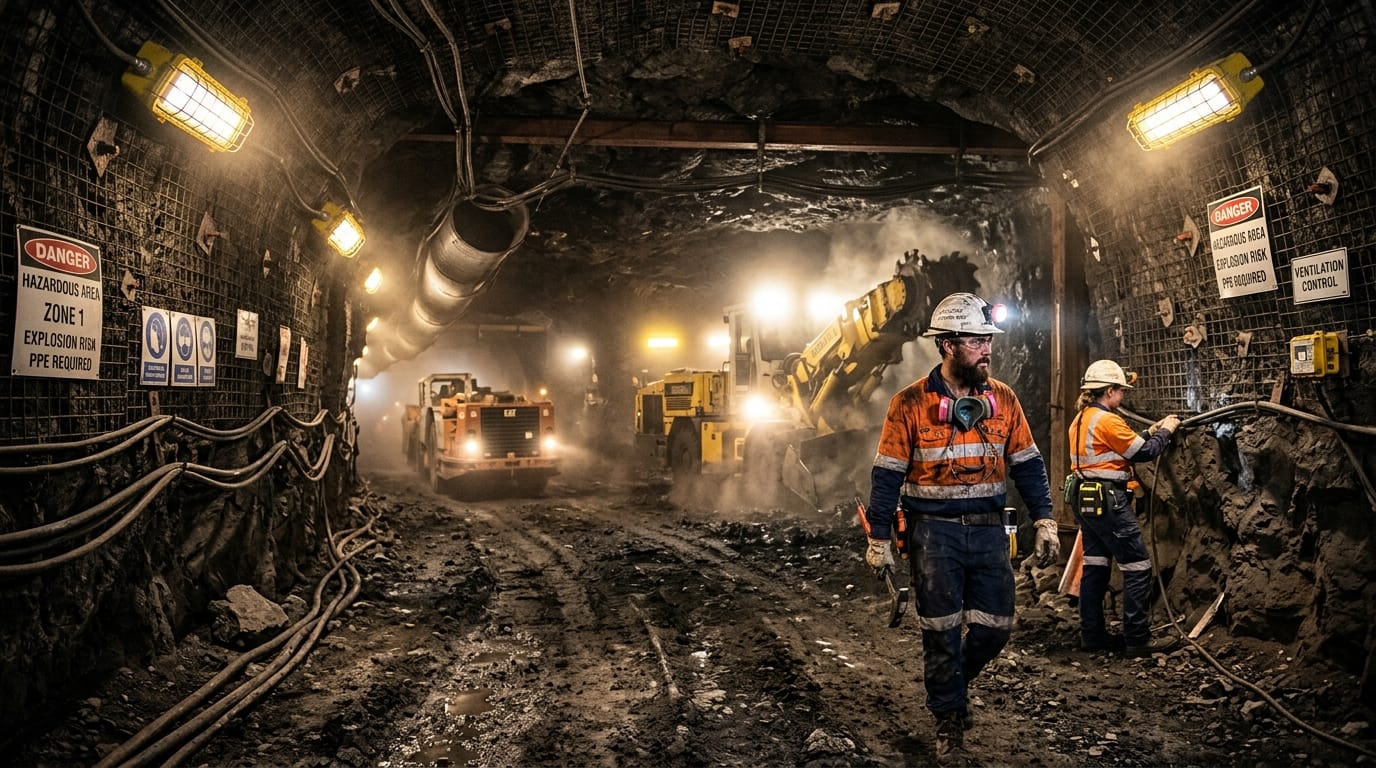
Mining is one of the biggest users of hazardous lighting in Australia. Big operations run in Western Australia, Queensland, and other states. Underground mines face methane gas and thick coal dust every day. Surface mines deal with rough weather and dusty air too.
Special LED strip lights work great along tunnels, conveyors, and working faces. They light up the whole area evenly so drivers and machine operators can see clearly. This reduces trips, falls, and mistakes. MineGlow offers IECEx certified products made just for these tough mining conditions. Their lights are built to handle bumps, water, and constant use while staying safe.
Oil and Gas Industry
The oil and gas sector needs reliable hazardous lighting on offshore rigs, in refineries, at LNG plants, and in onshore processing areas. These places often fall into Zone 1 or Zone 2 because of gases that can escape. Drilling platforms and pipelines sit in harsh sea air or remote dry lands where lights must work perfectly.
Many companies now switch to energy-saving LED hazardous lighting. These new lights handle salt spray, strong winds, and big temperature changes better than older types. They keep platforms and plants bright and safe around the clock.
Chemical and Pharmaceutical Processing
Chemical plants handle liquids and powders that can make explosive mixtures. Pharmaceutical factories work with fine dusts and solvents too. These areas need lights that meet very clean and safe standards.
In cleanrooms, the lights must not add any extra particles to the air. Good hazardous lighting here stops explosions while letting workers see every detail clearly. This helps keep products pure and people protected.
Manufacturing and Heavy Industry
Many factories use hazardous lighting too. Food processing plants have dust from grain or sugar that can explode. Metal shops, paint rooms, and places with flammable materials also need special lights.
Warehouses, ports, and long conveyor lines benefit from even lighting that shows every corner. This makes moving goods safer and faster. The lights stand up to constant vibration and cleaning without failing.
Tunnelling, Construction, and Infrastructure Projects
Big tunnel jobs and construction sites often create temporary hazardous zones. Workers dig through areas with gas or dust risks. They need lights that are easy to move and very strong.
Permanent lights go in finished tunnels and underground utility spaces. Portable options help during building phases when the site keeps changing. These solutions keep everyone safe as the project grows.
Other Emerging or Niche Industries
Power plants, wastewater treatment centers, busy ports, and airplane hangars sometimes have risky air too. New energy projects and smart city builds create more needs for safe lighting. These areas grow as Australia adds clean power and better infrastructure.
Choosing the Right Hazardous Lighting Solutions
Picking the best lights starts with checking IECEx certification. Look at how tough the light is, its IP rating for dust and water protection, and how much light it gives. Modern LED lights usually win over old styles because they cost less to run over many years.
Think about the total cost, not just the first price. Strong lights that last longer and need fewer changes save money and time. Companies like MineGlow show how Australian-made options can fit many different industries with smart, reliable designs.
Regulatory Landscape and Best Practices in Australia
Australia follows the AS/NZS 60079 standards closely. Lights must pass tests and get proper certificates. Regular checks and good maintenance keep everything working safely. In 2026, rules keep focusing on clear records and worker training.
Businesses do best when they plan audits, train their teams, and choose lights that match their exact zones. This simple habit prevents problems and keeps operations smooth.
Case Studies and Real-World Applications
One underground coal mine in Queensland added new strip lights along its main roads and work areas. Workers noticed much better visibility right away. Fewer small accidents happened, and the team could move faster. The lights paid for themselves quickly through lower repair bills and happier staff.
An oil and gas facility on the coast switched to LED hazardous lighting on their platform. The new lights handled salty winds and gave steady brightness. Maintenance visits dropped, and energy use fell. Safety checks showed everyone felt more confident on the job.
A chemical plant that mixes solvents installed certified lights in dusty zones. Production ran without any lighting-related stops. The clean design also helped meet strict hygiene rules for their products.
Another example comes from a big port warehouse handling grain. Proper hazardous lighting cut dust-related visibility issues. Loading and unloading became safer and quicker for the whole crew.
Future Trends in Hazardous Lighting in Australia
LED technology keeps getting better with brighter light, longer life, and even smarter controls. Some systems now connect to monitors so managers can check them from far away. This helps save energy and spot problems early.
Sustainability matters more each year. New lights use recycled parts and cut power needs. The whole market is expected to keep growing as industries expand and want greener options. Companies like MineGlow keep creating fresh ideas to meet these changing needs.
FAQ
What makes hazardous lighting different from normal lights?
These lights have special boxes and parts that contain any heat or spark. They will not start a fire even if gas or dust is in the air. Normal lights can make dangerous hot spots or sparks.
Do all mines need the same kind of lights?
No. Each mine checks its own zones first. Some spots need stronger protection than others. Always match the light to the exact risk level.
How long do LED hazardous lights last?
Many good LED lights keep working well for 50,000 hours or more. That is many years of daily use with less changing and fixing.
Is it expensive to switch to hazardous lighting?
The first cost may be higher, but over time you save on power and repairs. Many businesses see the money come back within a few years.
Can I use these lights outside in rain and dust?
Yes, look for high IP ratings. They are built to handle water, dust, and rough weather without failing.
What training do workers need?
Teams should learn how to check lights, report problems, and understand the zone rules. Simple regular training keeps everyone safe.
Are there new rules coming in 2026?
Rules keep updating to match better technology and stronger safety goals. Check with local experts for the latest details.
Where can small businesses start?
Begin with a safety check of your site. Talk to certified suppliers and pick lights that fit your exact needs and budget.
Conclusion
Many top industries in Australia rely on hazardous lighting to stay safe and productive. Mining, oil and gas, chemicals, manufacturing, construction, and more all benefit from these smart lights. Investing in quality options brings clearer vision, fewer accidents, lower costs, and peace of mind.
Take a moment to look at your own workplace. See where better lighting could help your team. Choosing the right hazardous lighting in Australia is a kind step that protects people and helps your business grow strong for years to come. Start today and enjoy a brighter, safer tomorrow.
Disclaimer:
This article shares general information for learning purposes only. It is not legal, technical, or safety advice. Always talk to qualified experts, engineers, and authorities for your specific situation. Rules and best practices can change, so check current standards before making any decisions. The writer and publisher are not responsible for any actions taken based on this content.
Explore More
About the Author