Users do not care how complex a website, app, or software system is behind the scenes. They care that it works smoothly. Pages should load fast. Buttons should respond. Forms should submit properly. Payments should go through. The full journey should feel simple and reliable.
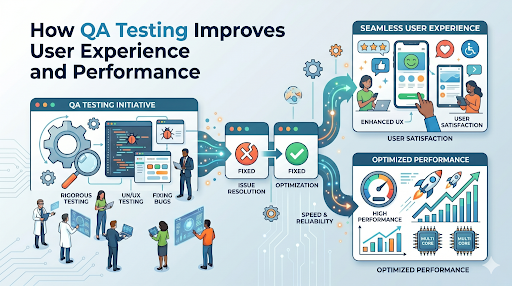
This is where QA testing services become important. QA testing helps businesses find bugs, performance issues, usability problems, and system risks before users face them. For Malaysian companies building digital products, strong QA can improve user experience, protect trust, and support better software performance from launch to long term growth.
What Are QA Testing Services?
QA testing services help businesses check whether their websites, mobile apps, software platforms, and digital systems work as expected. The goal is to find issues before real users experience them.
QA stands for quality assurance. It covers more than basic bug hunting. A proper QA process checks how a product performs, how stable it is, how easy it is to use, and how well it responds across different devices and conditions.
For example, QA testing can check whether a login page works correctly, whether a payment flow is smooth, whether a dashboard loads fast, or whether a mobile app crashes during use. It can also test forms, search features, account creation, checkout pages, notifications, reports, and internal workflows.
Good QA also looks at the full user journey. A feature may work technically, but still feel confusing to users. A page may load, but take too long. A button may function, but appear broken on certain screen sizes. These small problems can affect trust.
For Malaysian businesses, QA testing is especially useful for ecommerce sites, fintech platforms, customer portals, booking systems, logistics software, and mobile applications. These platforms often handle customer data, payments, and high traffic. A small issue can quickly become a business problem.
Strong QA testing services help teams release better products with fewer surprises.
Why QA Testing Matters for User Experience
User experience depends on how smooth, clear, and reliable a digital product feels. When a website or app works well, users rarely think about it. They simply continue browsing, signing up, buying, booking, or using the service. When something breaks, they notice it immediately.
QA testing helps remove these points of friction before they hurt the user journey. It checks whether pages display properly, forms submit correctly, menus work as expected, and important actions can be completed without confusion. It also helps identify broken links, layout issues, missing messages, unclear steps, and errors that may block users from completing a task.
This matters because small issues can create big drop offs. A slow checkout page can reduce conversions. A failed login can increase support tickets. A broken mobile layout can push users to competitors. A confusing onboarding flow can make new users leave before they understand the product.
For Malaysian businesses, user experience is also tied to trust. Customers are more likely to return when a platform feels stable and easy to use. This is even more important for platforms that involve payments, personal information, bookings, accounts, or business operations.
Good QA testing services help businesses build that trust. They make sure the product feels polished, dependable, and ready for real users.
How QA Testing Improves Software Performance
Software performance affects how users feel about a product. A platform can have useful features, strong design, and good content, but if it loads slowly or crashes often, users will not stay for long.
QA testing helps teams find performance problems before they become visible to users. Performance testing checks page speed, response time, server behavior, database load, and system stability. It shows how the product behaves during normal use and during high traffic periods.
This is important for Malaysian businesses that run ecommerce stores, payment platforms, booking systems, customer portals, delivery apps, and online services. Traffic can increase quickly during campaigns, festive seasons, product launches, or flash sales. Without proper testing, the system may slow down, freeze, or fail at the worst time.
Load testing is one of the most useful parts of performance QA. It tests how many users the system can handle at the same time. It also helps teams understand when performance starts to drop. With this insight, developers can improve code, optimize databases, adjust server resources, and prepare the system for growth.
Good QA testing services also support long term performance. As new features are added, testing helps make sure older functions still work and the product remains stable.
For users, this creates a smoother experience. For businesses, it reduces downtime, complaints, lost sales, and reputational damage.
Main Types of QA Testing Businesses Should Know
Different products need different types of QA testing. A business website, mobile app, customer portal, fintech platform, and internal software system will not have the same risks. Still, there are several core testing types that most Malaysian businesses should understand.
Functional Testing
Functional testing checks whether each feature works as expected. This includes login, search, checkout, form submission, account creation, payment flow, filters, reports, notifications, and admin tools. The goal is to confirm that every key action performs correctly.
Usability Testing
Usability testing checks whether the product is easy to use. It looks at navigation, page layout, button placement, content clarity, user flow, and mobile experience. A feature can work from a technical view but still feel confusing. Usability testing helps close that gap.
Performance Testing
Performance testing checks speed, response time, load capacity, and system stability. It helps teams understand how the product performs during normal usage and heavy traffic. This is important for platforms that cannot afford slow pages or downtime.
Security Testing
Security testing checks for weaknesses that may expose business or customer data. It can help identify unsafe access, weak authentication, data exposure, and other risks. This is important for platforms that handle accounts, payments, documents, or sensitive information.
Compatibility Testing
Compatibility testing checks whether the product works across different devices, browsers, screen sizes, and operating systems. Malaysian users may access a platform from many types of phones, browsers, and networks. QA helps make sure the experience stays consistent.
Together, these testing types help businesses improve reliability, performance, usability, and trust. Strong QA testing services bring them into one structured process.
Key Benefits of QA Testing Services for Malaysian Businesses
Strong QA testing services help Malaysian businesses launch better digital products and maintain them with more confidence. The first clear benefit is fewer bugs after launch. When issues are found early, developers can fix them before users are affected. This reduces complaints, support tickets, and urgent repair work.
QA testing also improves customer trust. Users feel safer when a platform loads quickly, responds properly, and handles important actions without errors. This matters for ecommerce stores, fintech platforms, booking systems, and customer portals where users share information or make payments.
Another major benefit is faster product improvement. QA gives product teams clear feedback. Instead of guessing why users are dropping off or why a feature feels weak, teams can review test results and fix the real problem. This makes development more focused.
QA can also lower long term development costs. Bugs are usually cheaper to fix before launch than after launch. Once a product is live, an issue may affect customers, sales, marketing campaigns, operations, and brand reputation. Early testing helps prevent that chain reaction.
Performance also improves over time. Regular testing helps businesses monitor speed, stability, and system behavior as more users come in. This is useful for companies that plan to scale.
A reliable digital product creates a stronger brand impression. Users may not praise every smooth action, but they remember when something breaks. QA helps make sure the experience feels stable, professional, and worth trusting.
How QA Testing Supports Custom Application Development
Custom application development gives businesses software that fits their workflows, users, and goals. That also means the testing process must be specific. A generic checklist is not enough when a platform has custom features, internal logic, user roles, integrations, or sensitive data flows.
QA testing supports custom development by checking whether the software works in real business conditions. It tests the features that matter most to the company, such as approval flows, dashboards, reports, payment steps, customer profiles, notifications, and admin controls. This helps confirm that the application is not only functional, but also practical for daily use.
It also keeps development aligned with business goals. A system may pass a technical check but still fail to support the actual workflow. QA helps identify those gaps earlier. For example, a report may generate correctly but take too long to load. A user role may have access to the wrong section. A form may collect the right data but feel difficult to complete.
For companies working with cloud platforms, AI tools, big data systems, crypto solutions, or biometric digital identity, QA becomes even more important. These environments often involve integrations, security layers, and performance demands. Testing helps reduce risk before the system reaches users.
Strong QA testing services make custom software more reliable, easier to use, and better prepared for long term growth.
QA Testing and Digital Trust
Digital trust is built through small, consistent experiences. A user logs in without trouble. A page loads quickly. A payment goes through smoothly. A form saves correctly. A dashboard shows the right information. These moments may seem simple, but they shape how users feel about a platform.
QA testing protects these moments. It checks the full experience so users can move through a website, app, or software system with confidence. When a product works consistently, users are more likely to stay, return, and complete important actions.
Trust becomes even more important when a platform handles sensitive information. This includes customer accounts, payment details, business data, identity records, documents, and transaction histories. A broken feature or unstable system can create doubt very quickly. Users may wonder if their data is safe or if the business is reliable.
Strong QA testing services help reduce that risk. Functional testing confirms that key features work. Performance testing supports speed and stability. Security testing helps identify weaknesses. Compatibility testing makes sure users get a consistent experience across devices and browsers.
For Malaysian businesses in finance, ecommerce, logistics, healthcare, public services, and technology, digital trust is not a nice extra. It is part of the product. QA helps protect that trust before, during, and after launch.
Why Choose Zchwantech for QA Testing Services
Zchwantech is a technology partner for businesses that want stronger digital products, not just working software. Its service ecosystem covers custom application development, cloud modernization, AI and data intelligence platforms, cybersecurity solutions, crypto solutions, and biometric digital identity. This wider technical background matters because QA is connected to more than bugs.
A good QA process needs to understand how the full system works. It must consider user flows, performance, data security, cloud readiness, integrations, and long term scalability. Zchwantech’s experience across multiple IT service areas makes it better positioned to test digital products from both a technical and business perspective.
For Malaysian companies, this can be useful when building ecommerce platforms, customer portals, mobile apps, internal systems, fintech products, or data driven applications. Each product has different risks. Some need stronger performance testing. Some need tighter security testing. Others need usability checks because the platform serves many types of users.
Zchwantech helps businesses look at software quality in a practical way. The goal is not only to pass a checklist. The goal is to create software that loads fast, works reliably, feels easy to use, and supports real business operations.
With structured QA testing services, businesses can reduce product risk, improve user experience, protect digital trust, and prepare their platforms for future growth.
Conclusion
QA testing services help businesses build digital products that work better for real users. They improve user experience, software performance, system reliability, and customer trust. They also help teams find problems earlier, reduce costly fixes, and prepare platforms for long term growth.
For Malaysian businesses, QA testing is no longer just a final step before launch. It is part of building strong digital products from the start. A smooth website, stable app, secure platform, or reliable internal system can make a real difference in how users see the brand.
Zchwantech supports this with practical technology expertise across custom application development, cloud modernization, cybersecurity, AI, data intelligence, crypto solutions, and biometric digital identity.
For businesses ready to improve software quality, user experience, and performance, contact Zchwantech at [email protected].
About the Author