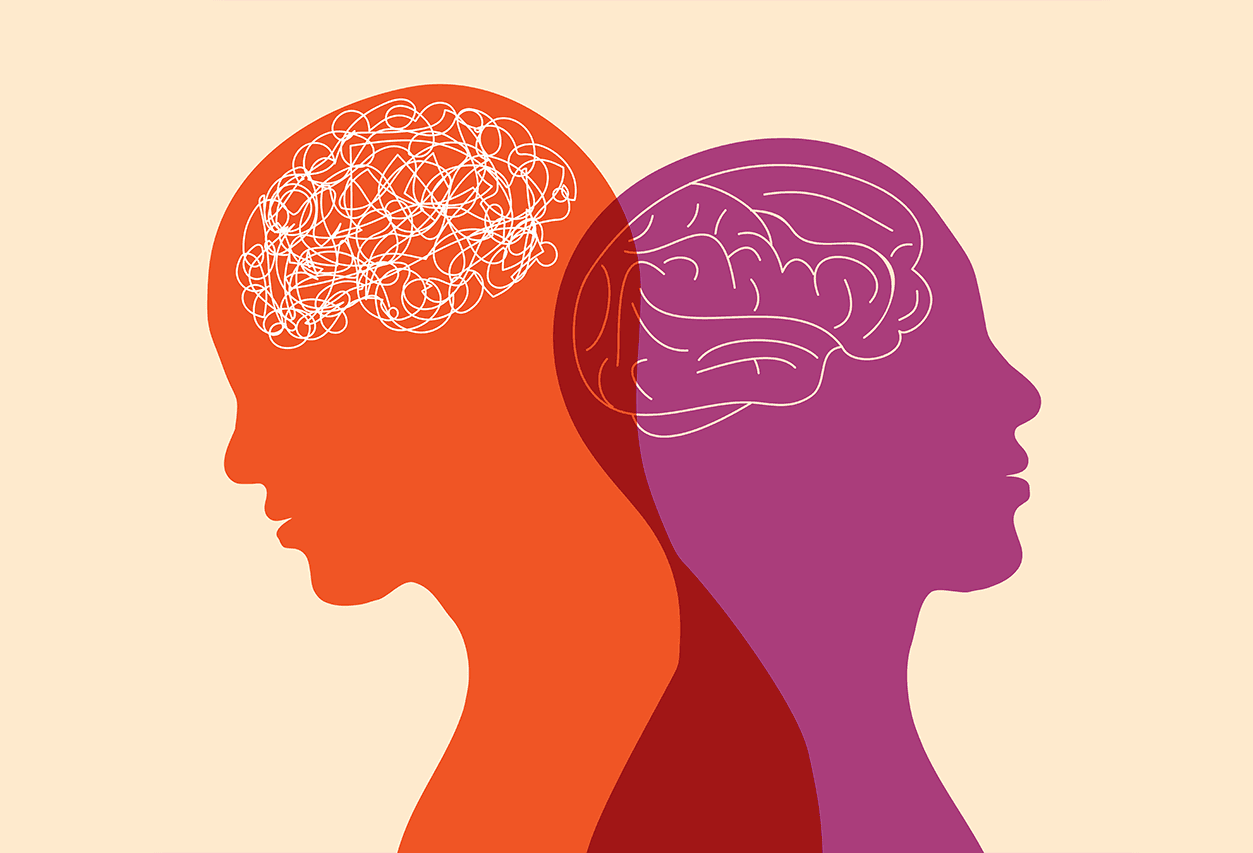
“He’s struggling with his mental health.” “She has mental health issues.” We say things like this all the time, and most of us mean something slightly different by them. Mental health and mental illness aren’t the same thing, but the words have blurred together to the point where the distinction often gets lost. That’s a problem — because how we talk about this stuff shapes how we respond to it, both in ourselves and in the people around us.
What “mental health” really means
Think of mental health the way you’d think of physical health. You have it. I have it. Your boss, your kids, the bus driver this morning — everyone has it. It’s the state of your emotional and psychological wellbeing on any given day, and it shifts.
Some weeks you feel sharp, calm, connected. Other weeks you feel flat, irritable, exhausted by small things. That’s not a failure — it’s just life moving through you. The World Health Organization describes mental health as being able to cope with normal stresses, work productively, and contribute to the people around you. Notice what’s not in that definition: feeling happy all the time. Good mental health isn’t the absence of bad days. It’s the ability to ride them out without falling apart.
What feeds it? Sleep, movement, decent relationships, a sense of purpose, time away from your phone, occasionally saying no to things. What drains it? The opposite of all that, plus the slower stuff — grief, money worries, a difficult work environment, loneliness.
What “mental illness” really means
Mental illness is something different. It’s a medical condition with recognised diagnostic criteria — depression, anxiety disorders, bipolar disorder, PTSD, OCD, schizophrenia, eating disorders, and others. These aren’t moods that pass after a good weekend. They’re conditions that disrupt how someone thinks, feels, or functions, often for long stretches, and they usually need proper treatment to manage well.
NHS figures suggest that around one in four people in the UK will experience a mental health problem each year. The causes are tangled — genetics, brain chemistry, trauma, prolonged stress, substance use, sometimes physical illness — and rarely come down to one neat reason.
Here’s the part that bears repeating: having a mental illness isn’t weakness, lack of willpower, or a personal failing. It’s a health condition, full stop. With the right combination of therapy, medication, lifestyle support, and people who actually listen, most people manage their conditions and get on with their lives.
So what’s actually different?
The clearest way to put it: everyone has mental health. Not everyone has a mental illness.
You can have rough mental health without having a mental illness — three weeks of bad sleep, a stressful project, and a row with your partner can leave anyone wrung out. And you can have a diagnosed mental illness while still being in genuinely good mental health, especially when treatment is working.
A few other distinctions worth holding onto. Mental health is something you maintain — through habits, relationships, and small daily choices. Mental illness is something you treat — usually with professional support. Mental health fluctuates over days and weeks. Mental illness tends to follow longer patterns and can be chronic or recurring. And mental health is assessed informally; mental illness is diagnosed against clinical criteria.
For workplaces trying to get this right, structured Mental health courses give managers and teams a shared vocabulary — so people stop guessing what to say and start spotting what’s actually going on.
Why mixing them up causes problems
When the line between mental health and mental illness disappears, people stop responding well — to themselves and to each other.
Picture someone three weeks into a brutal stretch at work, sleeping badly, snapping at their partner. They google their symptoms at 1 a.m. and start wondering if they have an anxiety disorder. Meanwhile, in the same office, someone with actual clinical depression keeps telling colleagues they’re “just a bit tired,” because admitting otherwise feels too big. One person panics about a problem they don’t have. The other minimises a problem they do. Managers, friends, and family — caught in the middle — often guess wrong in both directions.
Naming the difference fixes most of this. The first person needs rest, perspective, and probably a weekend off their phone. The second needs a GP appointment. Both situations are valid. Both deserve a response. They just aren’t the same response, and treating them as if they are helps nobody.
The same logic applies at work. Wellbeing perks — flexible hours, mental health days, a calmer culture — support everyone’s mental health. Reasonable adjustments, occupational health referrals, and time off support people with mental illness. A good organisation does both, and knows which is which.
Looking after both, in real life
Most of what supports mental health is unglamorous. Sleep at sensible hours. Move your body. See people you like. Eat actual food. Spend less time scrolling. Talk to someone when something’s bothering you instead of letting it stew. None of it is revolutionary, all of it works.
For mental illness, the playbook is different. Encourage the person to see their GP. Know where to point them — Mind, Samaritans, employee assistance programmes, NHS talking therapies. Listen without trying to fix. Don’t disappear once they’ve opened up.
Investing in mental health awareness training is one of the most practical things an organisation can do. It teaches people what to notice, how to start a conversation that doesn’t make things worse, and when to escalate to professional support — instead of leaving everyone hoping someone else will say something first.
The bottom line
Mental health and mental illness aren’t the same, and that distinction is doing a lot of work. Everyone has mental health, and it needs looking after. Mental illness is something more specific — a medical reality that calls for medical responses alongside human ones.
Knowing the difference doesn’t make you a therapist. But it does make you better at noticing what’s in front of you, asking the right kind of question, and offering the kind of support someone actually needs — whether that’s you, a colleague, or someone you love.
About the Author